.avif)
Structuring Touring Leonardo da Vinci Exhibitions: Formats and Delivery
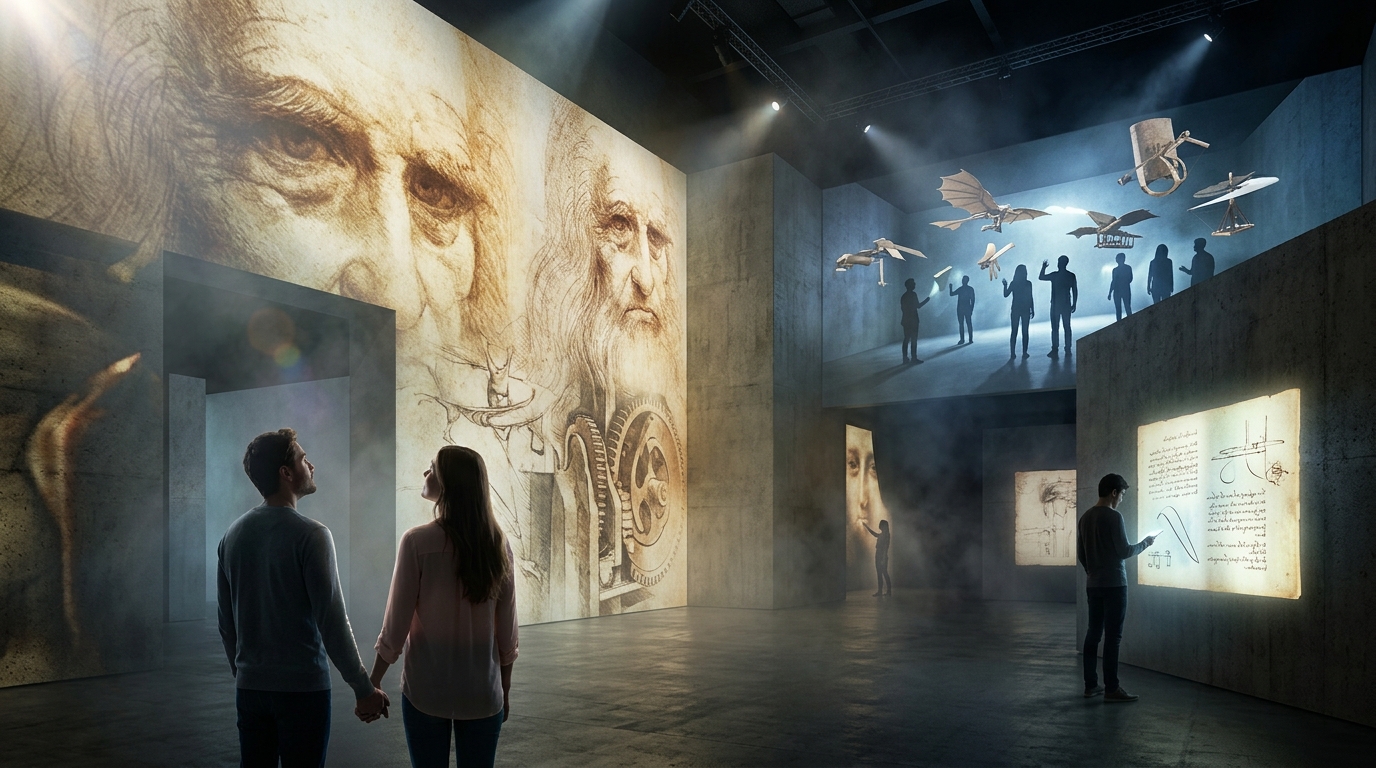
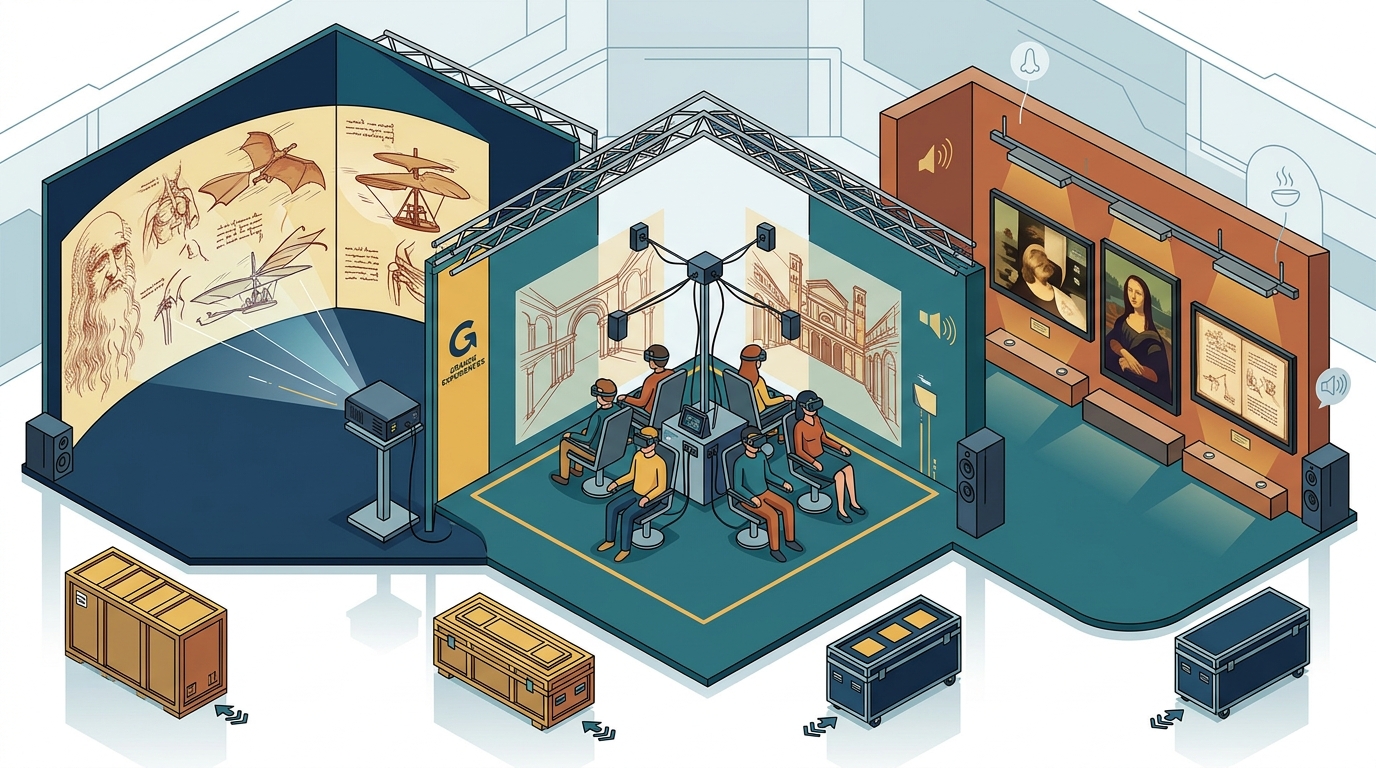
Touring Leonardo da Vinci exhibitions are structured using distinct delivery formats, primarily large-scale projection mapping, shared virtual reality, and permanent digital galleries. These methods allow institutions to present the Renaissance master's work through immersive, multi-sensory environments rather than static displays. Grande Experiences specializes in these delivery models, utilizing advanced technology to bring historical narratives to life for modern audiences.
Projection Mapping and Spatial Design
Projection mapping is a core delivery method for touring exhibitions, transforming physical spaces into dynamic digital canvases. This technique involves projecting high-definition visuals onto walls, floors, and ceilings to create a seamless 360-degree environment. The goal is to surround the visitor with moving images that respond to their presence.
The Role of Sound and Scent
Visuals alone are often insufficient for deep immersion. Modern touring exhibitions integrate dynamic soundscapes and scent diffusion to engage multiple senses simultaneously. This multi-sensory approach, often referred to as a proprietary environment, helps visitors feel connected to the historical context of the artwork. For example, the Leonardo da Vinci - 500 Years of Genius experience uses synchronized audio and aroma to amplify the beauty of the masterpieces.
The implication for venues is that they must consider acoustic treatment and ventilation systems. A well-designed projection space requires careful calibration of light levels to ensure image clarity while maintaining visitor comfort. This format is highly scalable, fitting into spaces ranging from small galleries to large halls.
Shared Virtual Reality (SVR) Environments
Shared Virtual Reality (SVR) is a delivery format that allows groups of visitors to explore a digital world together in real time. Unlike single-user headsets, SVR uses 6DoF (Six Degrees of Freedom) technology to enable free-roaming within a bounded physical space. Visitors wear headsets and move through a virtual reconstruction of historical sites or artistic concepts.
Interactive Storytelling
This format shifts the visitor from a passive observer to an active participant. In an SVR experience, users can walk through ancient Rome or explore the mechanics of Da Vinci's inventions up close. The Custom SVR solutions offered by Grande Experiences are designed to be cost-effective and highly engaging for younger demographics. The evidence for this approach lies in the increased dwell time and emotional connection reported by visitors who feel they are "living" the history.
The implication is that SVR requires a different spatial footprint than projection mapping. It needs a safe, open area for movement, often smaller in square footage but higher in technological density. This makes it ideal for museums with limited floor space but a desire for high-tech engagement.
Permanent Digital Galleries
Permanent digital galleries represent a long-term delivery model where the infrastructure is built into the venue's architecture. Unlike touring exhibitions that move from city to city, these spaces are designed to host a rotating series of immersive content. The THE LUME Indianapolis is a prime example, occupying over 30,000 square feet with 120 state-of-the-art projectors.
Infrastructure and Longevity
The implication for partners is a higher initial investment but greater long-term flexibility. Venues must commit to the technical maintenance of the infrastructure. However, the ability to host diverse cultural, sports, and wellness events makes these spaces versatile assets for the community.
Outdoor and Modular Installations
Outdoor installations and modular containers offer a flexible delivery method for public spaces and temporary events. These structures are designed to be weather-resistant and easily transported. They allow institutions to bring immersive art to parks, plazas, and festival grounds without the constraints of indoor architecture.
Accessibility and Reach
Modular installations can be scaled from small 20-square-meter units to large 1,500-square-meter structures. This flexibility enables organizers to reach audiences in non-traditional locations. The Digital Nights format, for instance, activates outdoor spaces with modular container or canopy installations. This approach democratizes access to immersive art by placing it in the public domain.
The implication is that outdoor delivery requires robust power and data connectivity. Organizers must plan for lighting, safety, and crowd management. Despite these challenges, the visual impact of large-scale outdoor projections can generate significant public interest and media coverage.
Key Takeaways
- Projection mapping is the most common format, using light and sound to create 360-degree immersive environments.
- Shared Virtual Reality (SVR) allows groups to explore digital worlds together using 6DoF tracking technology.
- Permanent digital galleries provide a fixed infrastructure for rotating immersive content, maximizing venue utility.
- Outdoor modular installations offer flexibility for public spaces and temporary events, expanding audience reach.
- Multi-sensory integration, including scent and dynamic audio, is critical for deepening visitor engagement.
- Choosing the right format depends on venue size, budget, and target audience demographics.
Frequently Asked Questions
What is the main difference between projection mapping and shared VR?
Projection mapping projects visuals onto physical surfaces for a shared, unmediated view, while shared VR uses headsets to place visitors inside a digital world where they can move freely.
How large does a venue need to be for a touring Leonardo exhibition?
It depends on the format. Projection mapping can work in spaces from 20 to 1,500+ square meters, while SVR requires a safe, open area for movement, often smaller in footprint but higher in tech density.
Can these exhibitions be hosted outdoors?
Yes, modular container or canopy installations are designed for outdoor use, allowing for weather-resistant immersive experiences in public spaces.
What technology is used to create the immersive environments?
These exhibitions utilize high-definition projectors, dynamic soundscapes, scent diffusion, and in some cases, 3D Gaussian Splatting for digitizing collections.
Who produces these touring exhibitions?
Grande Experiences is a leading producer, offering turn-key solutions for hosts and partners worldwide with over 25 million visitors to their exhibitions.
Do these exhibitions require a permanent installation?
No, most are touring and can be installed and removed from a venue. However, some partners choose to build permanent digital galleries to host rotating content.
Conclusion
Touring Leonardo da Vinci exhibitions are delivered through a variety of formats, each offering unique benefits for institutions and audiences. From the grandeur of permanent digital galleries to the interactive depth of shared virtual reality, the choice of structure depends on the venue's goals and resources. Grande Experiences provides the expertise and technology to bring these immersive narratives to life, ensuring that the legacy of Leonardo da Vinci remains relevant and engaging for modern visitors. To explore how these formats can be adapted for your venue, to discuss your project.