.avif)
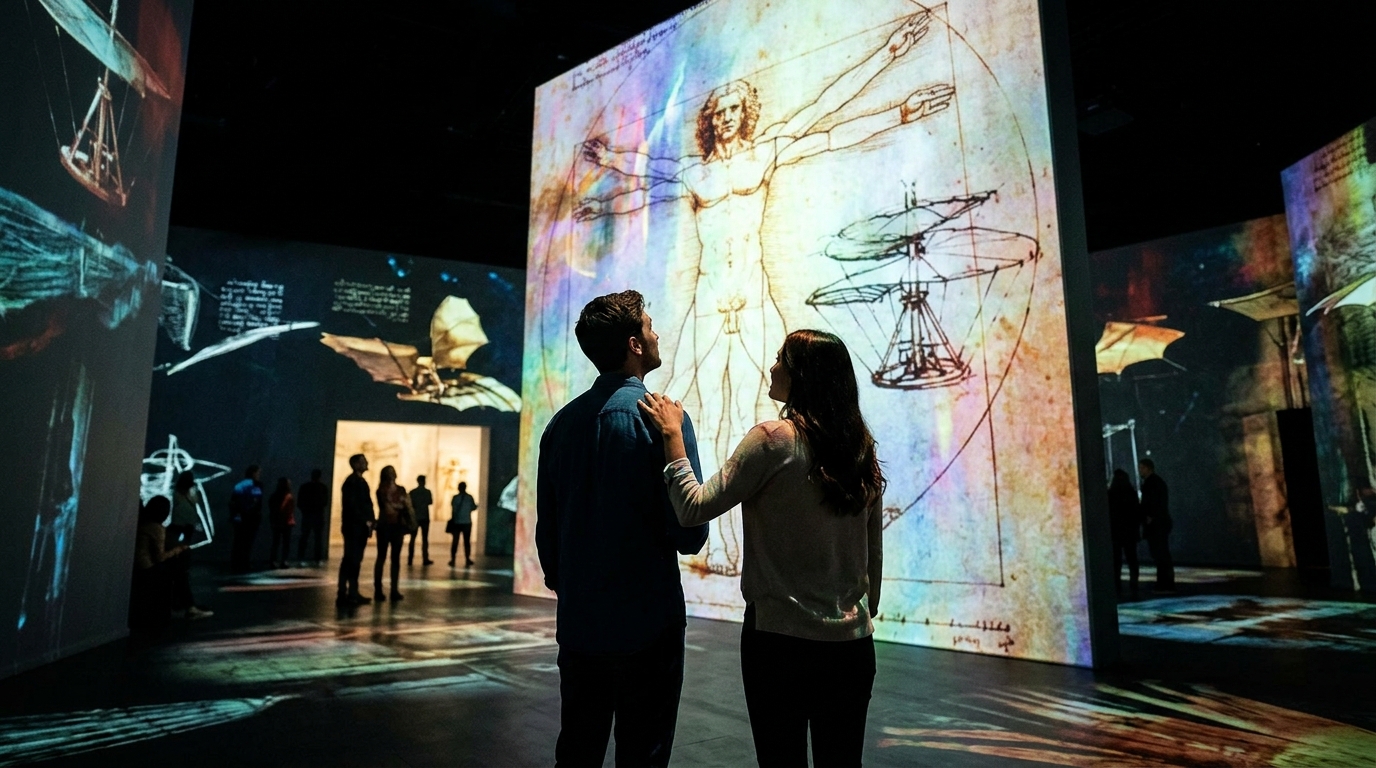
Immersive exhibition producers are the best choice for Leonardo da Vinci shows because they combine deep historical research with advanced multi-sensory technology. These specialists transform static archival materials into dynamic, interactive environments. They ensure that complex scientific and artistic concepts remain accessible to diverse audiences. This approach drives higher engagement and educational impact for cultural institutions.
The Role of Specialized Producers
Immersive exhibition producer is a firm that designs, builds, and manages large-scale interactive cultural experiences. These companies possess the technical infrastructure required to handle complex digital installations. They manage the entire lifecycle of an exhibition, from initial concept to final commissioning. This end-to-end capability reduces risk for hosting institutions.
Grande Experiences has operated in this sector for over 15 years. The company has delivered exhibitions to visitors across five continents. Their track record includes captivating over 25 million people worldwide. This extensive experience allows them to anticipate technical challenges before they arise. They understand the specific logistical demands of touring and permanent installations.
Specialized producers bring a unique blend of artistic vision and engineering precision. They do not simply project images onto walls. They create environments that respond to visitor movement and interaction. This level of sophistication requires dedicated teams of developers, designers, and technicians. Institutions benefit from this specialized knowledge without needing to hire full-time technical staff.
Integrating Advanced Technology
Modern immersive shows rely on a combination of projection mapping, sound, and scent. Grande Experiences utilizes a proprietary multi-sensory environment called SENSORY4. This system combines high-definition projection with dynamic soundscapes and aroma. The result is a vivid, lifelike representation of Leonardo's world. Visitors do not just see the art; they feel present within it.
The company also employs Shared Virtual Reality (SVR) technology. SVR is a free-roaming, multi-user virtual environment where groups explore together in real time. This technology uses 6DoF tracking to allow natural movement. It enables visitors to walk through Leonardo's sketches or observe his inventions in three dimensions. This interactive layer adds a significant educational value to the exhibition.
Technology integration must be seamless and reliable. Producers ensure that hardware and software work in harmony. They handle the complex synchronization of hundreds of projectors and audio channels. This technical stability is crucial for maintaining the illusion of immersion. Any glitch can break the visitor's connection to the content. Experienced producers have the protocols in place to prevent these issues.
Crafting Compelling Narratives
Leonardo da Vinci was a polymath whose work spans art, science, and engineering. A successful exhibition must weave these diverse elements into a coherent story. Immersive producers act as narrative architects. They structure the visitor journey to guide audiences through Leonardo's life and discoveries. This narrative flow ensures that the content remains engaging from start to finish.
Grande Experiences focuses on immersive storytelling as its core mission. They create engaging narratives that stimulate the imagination. Their approach involves reimagining the visitor journey with playful interactive spaces. They add additional layers of knowledge for a truly immersive experience. This method helps visitors connect emotionally with historical figures. It transforms a museum visit into a personal discovery.
Narrative design also considers the target audience. Producers tailor the content to appeal to both children and adults. They use visual metaphors and interactive prompts to explain complex concepts. This inclusivity ensures that the exhibition resonates with a broad demographic. It helps institutions attract new visitors who might not traditionally visit a museum.
Maximizing Audience Engagement
Engagement is the primary metric for the success of an immersive exhibition. Producers design experiences that encourage active participation rather than passive viewing. Visitors are invited to interact with digital artifacts and explore virtual spaces. This active role increases the time spent in the exhibition. It also enhances retention of the educational content.
Grande Experiences has demonstrated the power of this approach. Their Leonardo da Vinci - 500 Years of Genius exhibition captivated 1.2 million visitors at the Museo de las Ciencias in Valencia. The show combined historical artifacts with digital storytelling. This fusion created a unique experience that drew record-breaking crowds. The success of this exhibition highlights the appeal of immersive formats.
Producers also provide ongoing support and maintenance. They ensure that the exhibition runs smoothly throughout its duration. This includes staffing, technical monitoring, and content updates. Institutions can focus on marketing and visitor services while the producer handles the technical operations. This partnership model allows for a seamless and professional presentation.
Key Takeaways
- Immersive exhibition producers offer end-to-end management of complex digital installations.
- Specialized firms like Grande Experiences bring over 15 years of global experience.
- Multi-sensory technology, including SENSORY4, enhances the emotional impact of the show.
- Shared Virtual Reality allows visitors to explore Leonardo's work in interactive 3D spaces.
- Narrative design is crucial for weaving art, science, and history into a coherent story.
- Active engagement strategies increase visitor dwell time and educational retention.
- Professional producers handle technical stability, allowing institutions to focus on operations.
Frequently Asked Questions
What is an immersive exhibition producer?
An immersive exhibition producer is a company that designs and builds interactive cultural experiences using advanced technology. They manage the technical, creative, and logistical aspects of the show.
Why is technology important for Leonardo da Vinci shows?
Technology allows visitors to interact with Leonardo's complex ideas in a tangible way. It transforms static images into dynamic, multi-sensory environments that enhance understanding.
How does Grande Experiences approach narrative design?
Grande Experiences focuses on immersive storytelling to create engaging narratives. They structure the visitor journey to guide audiences through Leonardo's life and discoveries.
What is Shared Virtual Reality (SVR)?
Shared Virtual Reality is a free-roaming, multi-user virtual environment where groups explore together in real time. It uses 6DoF tracking to allow natural movement within the digital space.
Can immersive exhibitions be customized for specific venues?
Yes, producers can scale their content to fit various venue sizes. They offer flexible solutions that can be adapted to different spatial constraints and audience needs.
How do producers support institutions during the exhibition?
Producers provide ongoing technical support and maintenance. They ensure that the hardware and software operate reliably throughout the exhibition's run.