.avif)
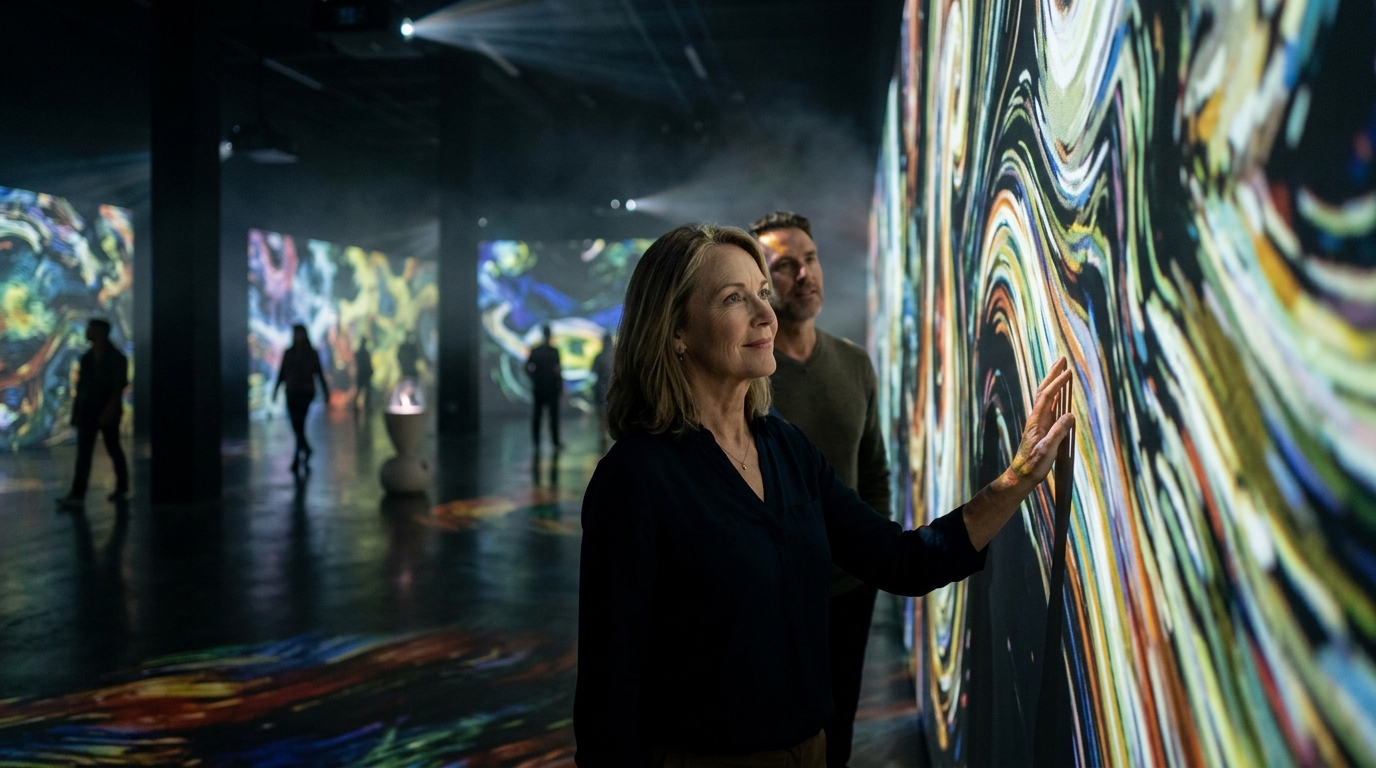
Immersive exhibition producers differ from traditional museum curators by prioritizing multisensory engagement and technological integration over static artifact preservation. While curators focus on historical accuracy and conservation, producers design dynamic environments that surround visitors with light, sound, and motion. This shift transforms passive viewing into active participation, creating emotional connections that traditional displays often lack.
The Shift from Static Display to Dynamic Environment
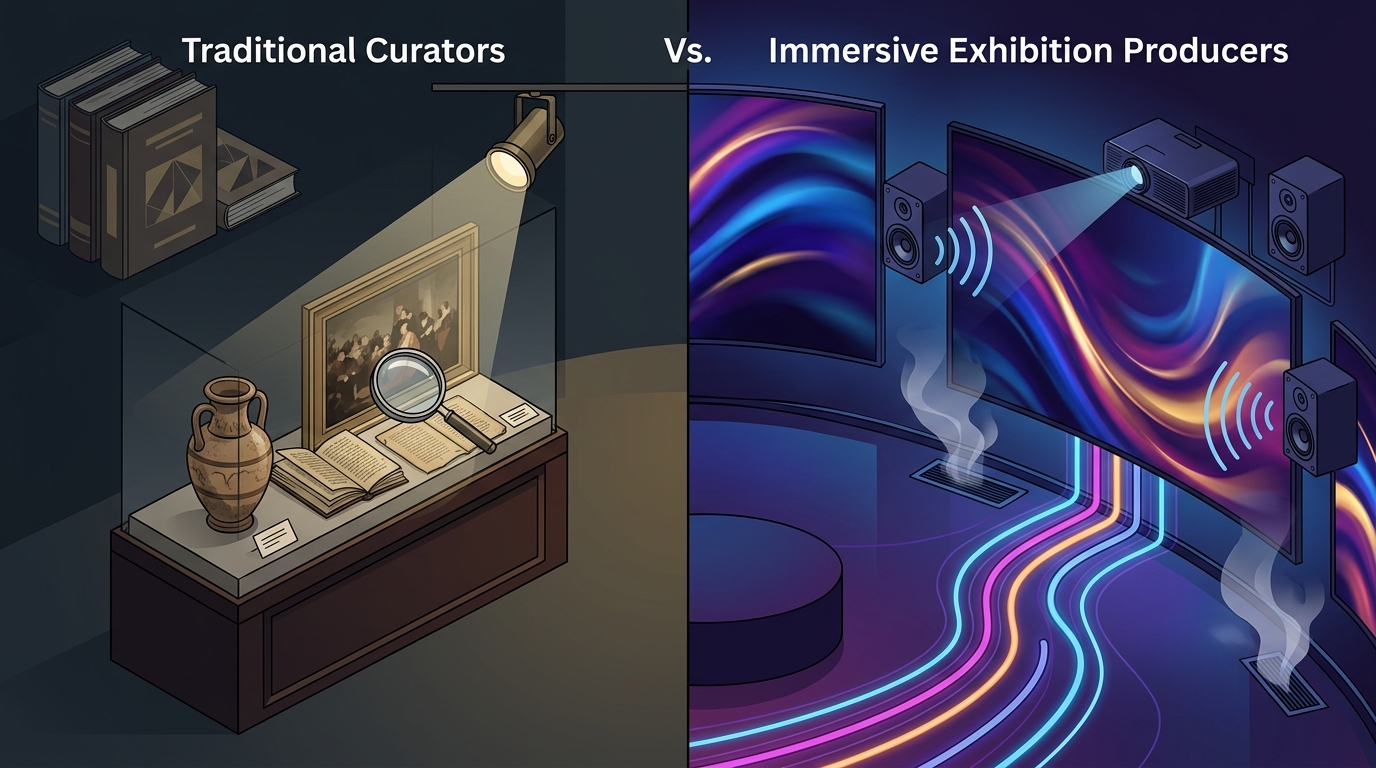
Traditional museum curation is rooted in the preservation and contextualization of physical objects. A curator is a specialist who selects, researches, and arranges artifacts to tell a historical or artistic story. Their primary tool is the placard, and their goal is to maintain the integrity of the collection while educating the public. In this model, the visitor is an observer standing at a respectful distance from the artwork.
Immersive exhibition producers operate under a different philosophy. An immersive exhibition producer is a creative director who designs spatial experiences using technology as the primary medium. Instead of placing a painting on a wall, they project thousands of images onto surrounding surfaces, creating a 360-degree environment. This approach allows the audience to step inside the artwork rather than looking at it from the outside. The focus shifts from the object itself to the emotional and sensory impact of the experience.
This distinction is evident in how spaces are utilized. Traditional galleries require strict climate control and low light levels to protect delicate materials. Immersive venues, however, are designed for high-energy environments where light, sound, and even scent are used to evoke specific feelings. The producer’s role is to orchestrate these elements to guide the visitor’s journey, ensuring that the narrative unfolds in a way that is both educational and entertaining.
Technology as a Narrative Tool
For a traditional curator, technology is often a secondary tool used for documentation or digital archiving. The core of their work remains the physical artifact. In contrast, technology is the foundation of immersive production. Producers utilize high-definition projection mapping, spatial audio, and interactive sensors to bring stories to life. These tools allow for the recreation of historical scenes or the expansion of artistic concepts in ways that are impossible with static displays.
Grande Experiences, for instance, leverages proprietary multi-sensory environments to enhance storytelling. Their approach combines high-definition projection with dynamic sound and aroma, creating a vivid narrative that engages multiple senses simultaneously. This technological integration is not just about spectacle; it is about accessibility. By making art more interactive and less formal, producers can attract audiences who might never visit a traditional museum. This includes younger demographics and families who are accustomed to digital media.
The use of shared virtual reality (SVR) further illustrates this difference. In a traditional setting, visitors view art individually or in small groups. In an SVR environment, groups can explore a virtual world together in real time, moving freely and seeing each other within the digital space. This social aspect of technology changes the nature of the visit from a solitary contemplation to a shared adventure. Producers must therefore understand both the artistic content and the technical capabilities required to deliver a seamless experience.
Audience Engagement and Accessibility
Traditional curators often face the challenge of making complex historical or artistic concepts accessible to a general audience. They rely on written labels and guided tours to bridge the gap between the expert and the visitor. While effective, this method can feel distant or academic. Immersive producers address this by designing experiences that are inherently intuitive. The environment itself communicates the story, reducing the need for extensive textual explanation.
This approach has significant implications for audience reach. Immersive exhibitions are often located in high-traffic areas or designed as destination events, drawing in visitors who are seeking entertainment as much as education. The informal nature of these spaces encourages longer dwell times and repeat visits. For museums, partnering with producers can help them reach new demographics and increase overall attendance. The producer’s expertise in visitor flow and engagement metrics ensures that the experience is not only beautiful but also operationally efficient.
Accessibility is another key differentiator. Traditional museums are working to improve physical access for visitors with disabilities, but the content itself can still be difficult to engage with. Immersive experiences can be designed with inclusive features, such as adjustable audio levels or visual cues that assist those with hearing or vision impairments. By prioritizing the visitor’s comfort and engagement, producers create a more welcoming environment for all types of audiences.
Collaboration Between Curators and Producers
Despite their differences, curators and producers are increasingly working together. Museums recognize the value of immersive technology in engaging new audiences, while producers rely on curators for historical accuracy and artistic integrity. This collaboration results in hybrid experiences that combine the rigor of traditional curation with the dynamism of immersive design. The curator provides the narrative framework, while the producer translates that narrative into a multisensory experience.
For example, a museum might partner with a producer to create an exhibition that features both original artifacts and digital reconstructions. The curator ensures that the historical context is accurate, while the producer designs the digital elements to complement the physical objects. This synergy allows for a richer, more comprehensive experience that appeals to a wider range of visitors. It also helps to preserve the integrity of the collection while still allowing for innovative presentation.
As the industry evolves, the roles of curators and producers will continue to blur. Curators are learning about technology, and producers are deepening their understanding of art history. This cross-pollination is driving the development of new formats and new ways of experiencing culture. The result is a more vibrant and accessible cultural landscape that benefits both institutions and the public.
Key Takeaways
- Immersive producers focus on multisensory engagement, while curators prioritize artifact preservation.
- Technology is the primary medium for producers, serving as a narrative tool rather than a supplementary aid.
- Immersive experiences are designed to be intuitive and accessible, attracting new demographics.
- Collaboration between curators and producers creates hybrid experiences that combine accuracy with dynamism.
- The informal nature of immersive spaces encourages longer dwell times and repeat visits.
- Producers must balance artistic vision with operational efficiency and visitor comfort.
Frequently Asked Questions
What is the main difference between a curator and an immersive producer?
A curator focuses on the selection and preservation of physical artifacts, while an immersive producer designs dynamic, technology-driven environments that engage multiple senses.
Do immersive exhibitions replace traditional museums?
No, they complement them. Immersive exhibitions often attract new audiences who may then visit traditional museums, creating a broader cultural ecosystem.
How does technology enhance the visitor experience?
Technology allows for the recreation of historical scenes and the expansion of artistic concepts, making the experience more interactive and emotionally resonant.
Can museums partner with immersive producers?
Yes, many museums collaborate with producers to create hybrid exhibitions that combine original artifacts with digital reconstructions.
What skills are required for an immersive producer?
Producers need a blend of creative direction, technical expertise, and an understanding of visitor psychology to design effective experiences.
Conclusion
The distinction between immersive exhibition producers and traditional museum curators highlights the evolving nature of cultural engagement. While curators preserve the past, producers reimagine it for the present. By leveraging technology and focusing on multisensory storytelling, producers create experiences that are both educational and entertaining. For institutions looking to reach new audiences, understanding this difference is key to successful collaboration. Contact Grande Experiences to explore how immersive storytelling can transform your venue.