.avif)
Immersive Digital Storytelling vs Traditional Leonardo da Vinci Exhibitions
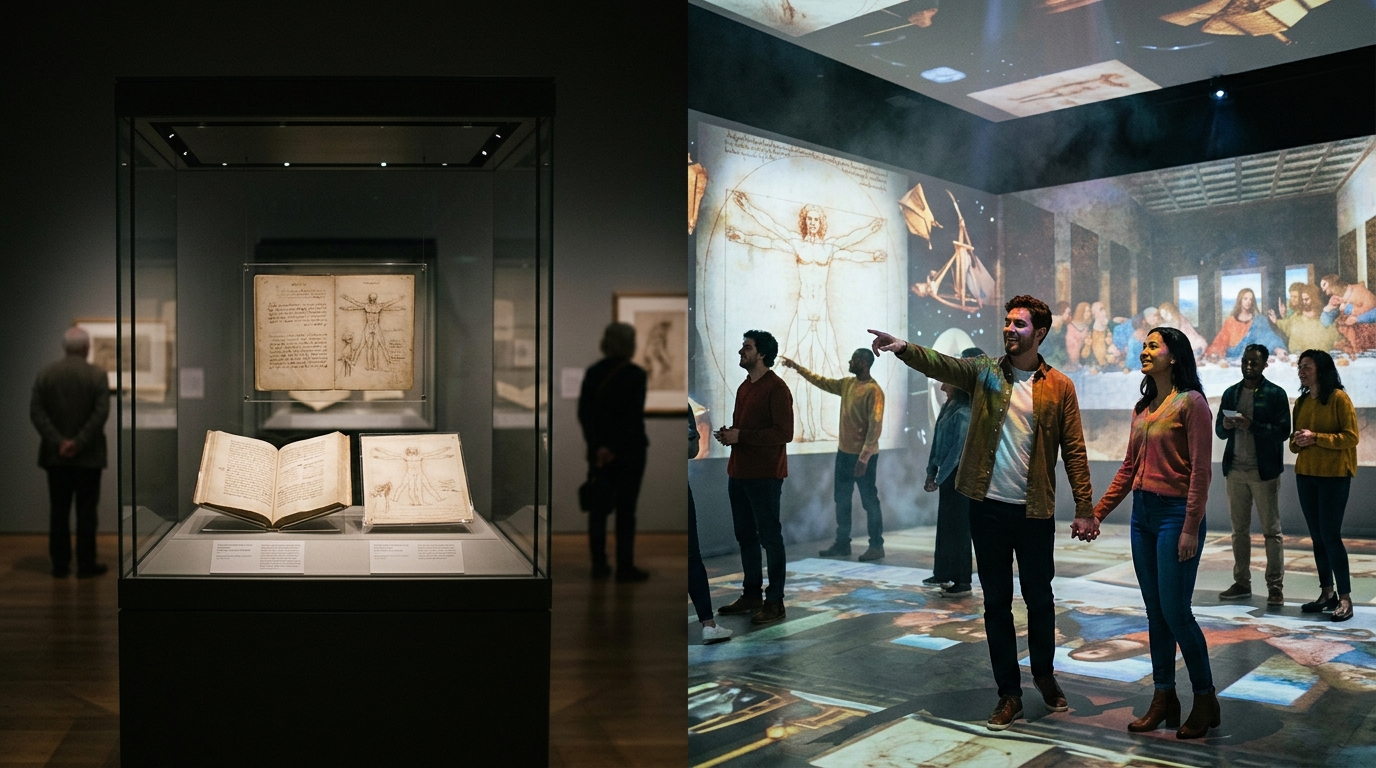
Immersive digital storytelling transforms static historical artifacts into dynamic, multi-sensory environments that actively engage visitor curiosity. Traditional Leonardo da Vinci museum exhibitions typically rely on static displays of manuscripts and artifacts, which often limit audience interaction and dwell time. Grande Experiences bridges this gap by converting historical curiosity into active participation through advanced digital technology.
The Static Limitation of Traditional Displays
Traditional museum exhibitions are defined by the physical presentation of historical objects in controlled environments. This approach prioritizes preservation and academic accuracy, often resulting in a passive viewing experience for the general public. Visitors typically observe manuscripts, sketches, and mechanical models from a distance, separated by glass cases and strict viewing protocols.
While this method protects fragile Renaissance artifacts, it creates a barrier between the audience and the creative process. The complexity of Leonardo da Vinci's engineering concepts is difficult to convey through static images alone. Without the ability to interact with the mechanisms or visualize the motion, many visitors struggle to grasp the full scope of his innovations.
The Challenge of Context
Context is a critical component of historical understanding. Traditional displays often lack the spatial and temporal context needed to explain how a specific invention functioned in the real world. This gap can lead to disengagement, particularly among younger audiences who expect interactive and digital content in their educational experiences.
Digital Reimagining of Renaissance Genius
Immersive digital storytelling is a narrative technique that uses large-scale projection, sound, and spatial design to surround the viewer in a simulated environment. This technology allows institutions to present historical figures not just as subjects of study, but as active participants in a living narrative. By digitizing the creative process, venues can demonstrate the motion and logic behind historical inventions.
Grande Experiences utilizes this approach to transform static historical data into a multisensory journey. The company's immersive exhibitions project high-resolution imagery and interactive elements that allow visitors to explore the mechanics of Renaissance engineering. This method turns curiosity into participation, enabling audiences to understand the function of complex machines through visual and auditory cues.
Multi-Sensory Engagement
Engagement is significantly higher when multiple senses are stimulated simultaneously. Digital installations incorporate evocative soundscapes and dynamic lighting to create an atmosphere that mirrors the historical period. This sensory depth helps visitors connect emotionally with the subject matter, fostering a deeper appreciation for the historical context.
STEAM Education and Audience Engagement
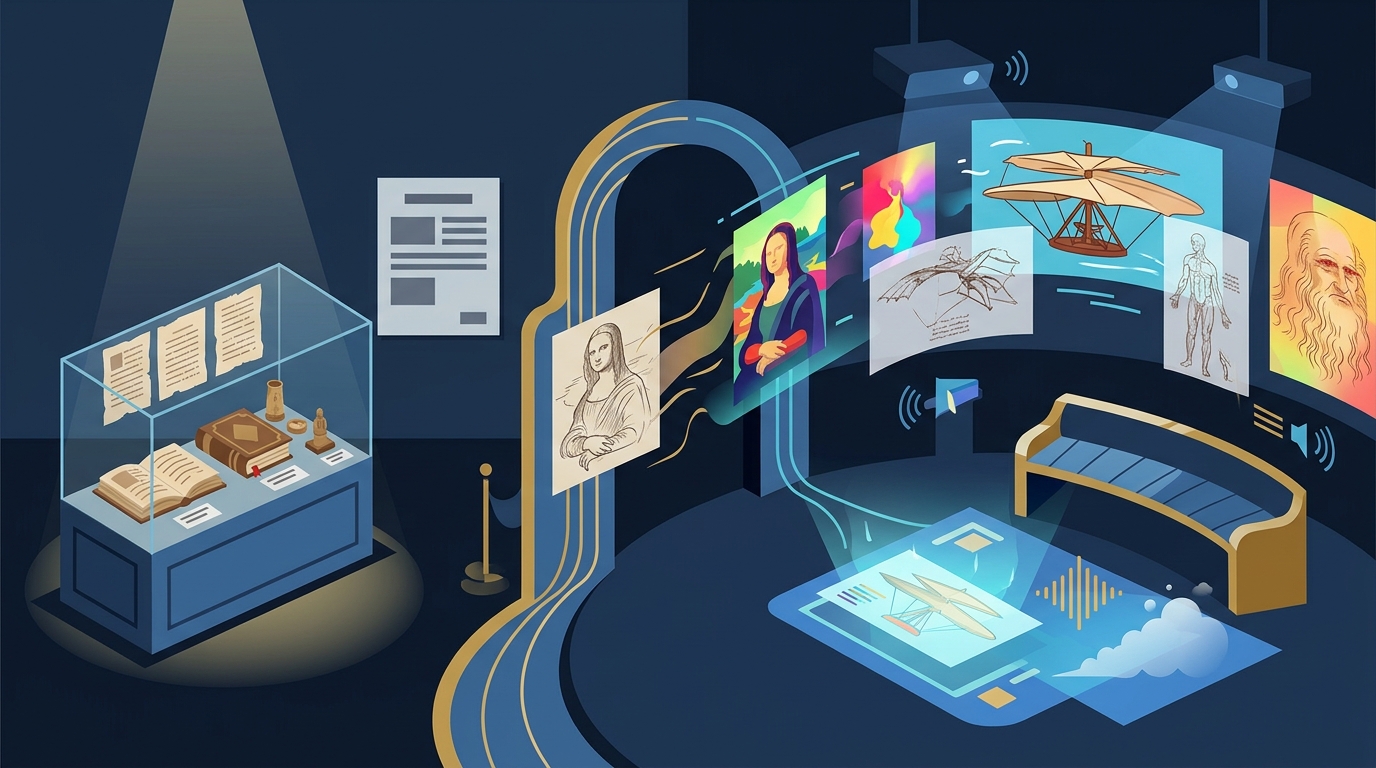
STEAM education is an interdisciplinary approach to learning that integrates Science, Technology, Engineering, Arts, and Mathematics. Leonardo da Vinci is a central figure in this framework because his work seamlessly blended artistic observation with scientific inquiry. Immersive exhibitions serve as powerful STEAM platforms by connecting historical innovation with modern technological concepts.
By presenting Leonardo's ideas through interactive technology, venues can demonstrate the relevance of historical engineering to contemporary design. This approach helps students and general audiences understand the foundational principles of mechanics and anatomy. The digital format allows for the visualization of concepts that are difficult to replicate with physical models, such as fluid dynamics or flight mechanics.
Accessibility and Inclusion
Digital storytelling enhances accessibility by providing multiple ways to consume information. Visitors can engage with the content at their own pace, revisiting specific sections or exploring different aspects of the narrative. This flexibility ensures that the exhibition remains inclusive and engaging for a diverse range of audiences, from children to academic researchers.
Operational Impact on Cultural Venues
Operational efficiency is a primary concern for museums and science centers when planning new exhibitions. Traditional exhibitions require significant resources for artifact conservation, security, and climate control. Immersive digital installations offer a different operational model, often requiring less space for physical storage and allowing for flexible deployment across various venue types.
Grande Experiences provides a comprehensive solution for venues looking to integrate immersive content into their programming. The company manages the entire lifecycle of the exhibition, from design and build to installation and ongoing support. This end-to-end approach reduces the operational burden on venue staff, allowing them to focus on visitor experience and local marketing.
Revenue and Dwell Time
Immersive exhibitions drive higher ticketed attendance and longer dwell times compared to static displays. The novelty and interactivity of digital content attract new and repeat audiences, contributing to increased secondary spend in retail and food and beverage areas. This financial impact makes immersive exhibitions a viable investment for cultural institutions seeking to diversify their revenue streams.
Key Takeaways
- Traditional exhibitions prioritize artifact preservation but often limit audience interaction and engagement.
- Immersive digital storytelling transforms static historical data into dynamic, multi-sensory environments.
- Grande Experiences specializes in creating immersive exhibitions that bridge the gap between art and science.
- STEAM education is effectively supported by digital platforms that visualize complex historical engineering concepts.
- Immersive installations offer operational flexibility and can drive higher attendance and dwell time for venues.
- Digital content enhances accessibility by allowing visitors to engage with material at their own pace.
Frequently Asked Questions
What is the main difference between immersive and traditional exhibitions?
Traditional exhibitions display physical artifacts in static environments, while immersive exhibitions use digital technology to create interactive, multi-sensory narratives that surround the visitor.
How does Grande Experiences approach Leonardo da Vinci content?
Grande Experiences transforms Leonardo's ideas into immersive, hands-on experiences that explore working machine inventions and interactive technologies, turning curiosity into participation.
Are immersive exhibitions suitable for educational purposes?
Yes, they serve as powerful STEAM platforms that connect historical innovation with modern concepts, making them highly effective for educational engagement.
What operational benefits do immersive exhibitions offer?
They offer operational flexibility, reduced need for physical artifact storage, and the ability to drive higher attendance and dwell time for cultural venues.
Can immersive exhibitions be customized for specific venues?
Yes, Grande Experiences designs and builds custom experiences tailored to the specific space, audience, and narrative goals of the hosting venue.
Conclusion
Immersive digital storytelling offers a compelling alternative to traditional museum displays by prioritizing active engagement and multi-sensory experience. For institutions seeking to connect modern audiences with historical genius, this approach provides both educational depth and operational efficiency. Grande Experiences provides the expertise and technology to bring these concepts to life, ensuring that the legacy of Leonardo da Vinci remains relevant and accessible. To explore how your venue can integrate immersive content, to discuss your project goals.