
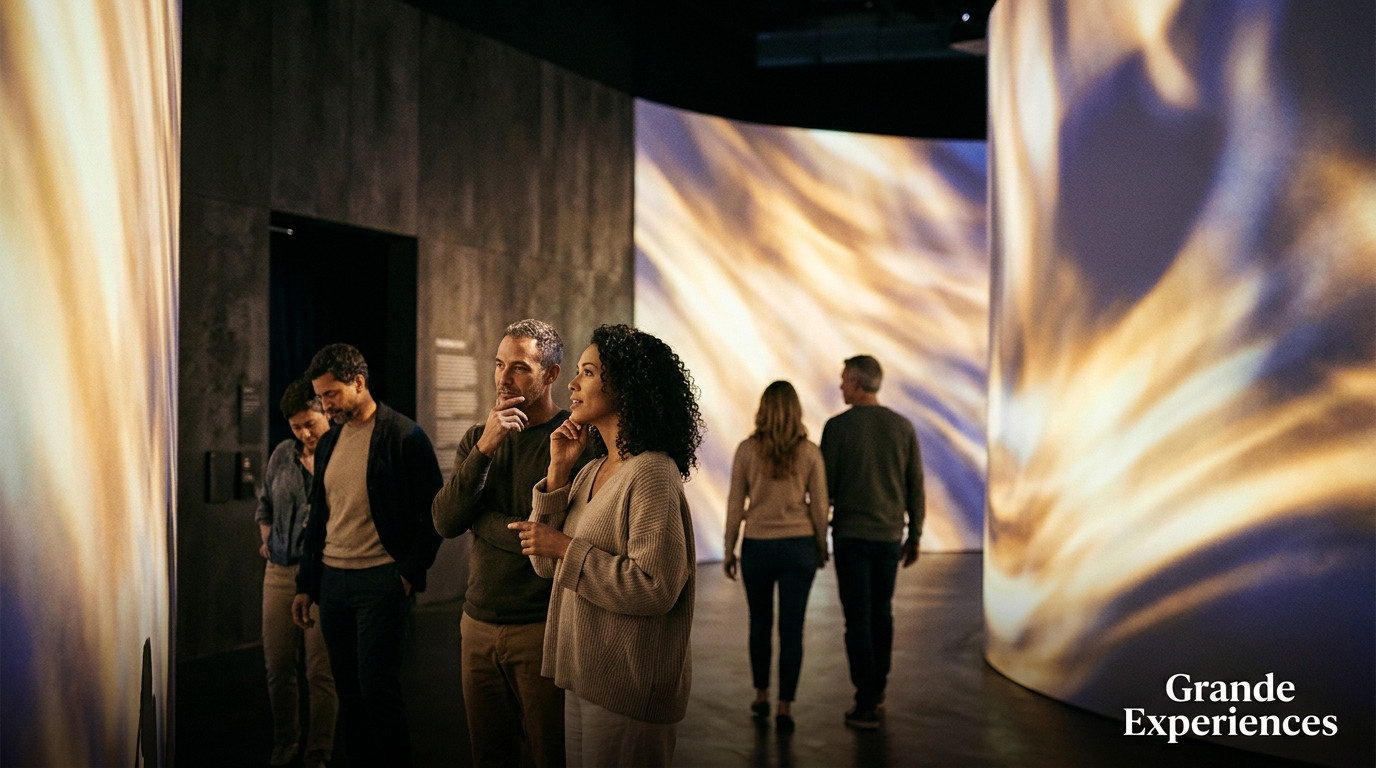
Choosing the wrong immersive art experience for your group often stems from ignoring physical comfort, accessibility needs, and the specific emotional tone of the content. Grande Experiences advises planners to prioritize venue flexibility and multi-sensory balance over raw spectacle. By focusing on these core factors, you ensure a memorable and inclusive outing for everyone in your party.
Ignoring Physical Comfort and Motion Sensitivity
One of the most common errors is assuming all attendees can handle intense visual stimulation. Immersive art is a narrative technique that uses large-scale projection, sound, and spatial design to surround the viewer in a simulated environment. While this creates a powerful effect, it can trigger discomfort for some. Research from Stanford University notes that virtual reality and immersive environments can cause "simulator sickness," a type of motion sickness, particularly when used in long doses. For group bookings, this means you must consider the physical layout. If your group includes individuals sensitive to rapid visual changes, look for exhibitions that offer a mix of static and dynamic content. Grande Experiences designs its environments, such as Van Gogh Alive, to balance immersion with comfort, ensuring the experience remains accessible rather than overwhelming.
Overlooking Accessibility and Inclusive Design
Another critical mistake is failing to verify accessibility features before booking. A truly inclusive experience must accommodate visitors with varying physical and sensory abilities. According to a review of research findings on immersive experiences in museums, social exchanges and environmental design significantly affect enjoyment and meaning-making. If the venue lacks clear pathways, adequate lighting for those with low vision, or audio descriptions, the experience becomes exclusive rather than inclusive. When evaluating a provider, ask about their approach to inclusive design. Grande Experiences emphasizes that their exhibitions are designed to be accessible, with content that can be experienced at one's own pace. This ensures that every member of your group, regardless of ability, can engage with the art on equal footing.
Mismatching the Audience's Interests and Age Range
Planners often select exhibitions based on their own preferences rather than the collective interests of the group. An immersive experience that appeals to art historians may bore a group of teenagers, while a high-energy street art show might overwhelm a senior group. You must align the content's tone with your audience's expectations. For example, Street Art Alive offers a high-energy, vibrant celebration of urban culture, which is ideal for younger demographics or groups seeking a dynamic atmosphere. Conversely, Leonardo da Vinci – 500 Years of Genius appeals to those interested in science, engineering, and history. By matching the thematic focus to your group's interests, you increase engagement and satisfaction. Consider what your group values: is it emotional connection, intellectual stimulation, or visual spectacle? according to Venue As A
Neglecting Logistics and Venue Practicalities
Even the best content can fail if the logistics are poor. A frequent mistake is ignoring the practical aspects of the venue, such as parking, entry flow, and dwell time. Immersive exhibitions often require a specific amount of time to fully appreciate, and rushing through the space diminishes the impact. Additionally, consider the location's convenience for your group. If the venue is difficult to reach or lacks adequate facilities, it can create friction before the experience even begins. Grande Experiences works with venues to ensure smooth operations, from entry to exit. When choosing a provider, look for one that offers clear information on duration, capacity, and venue amenities. This helps you plan a seamless day out, allowing your group to focus on the art rather than the logistics.
Underestimating the Role of Technology and Sound
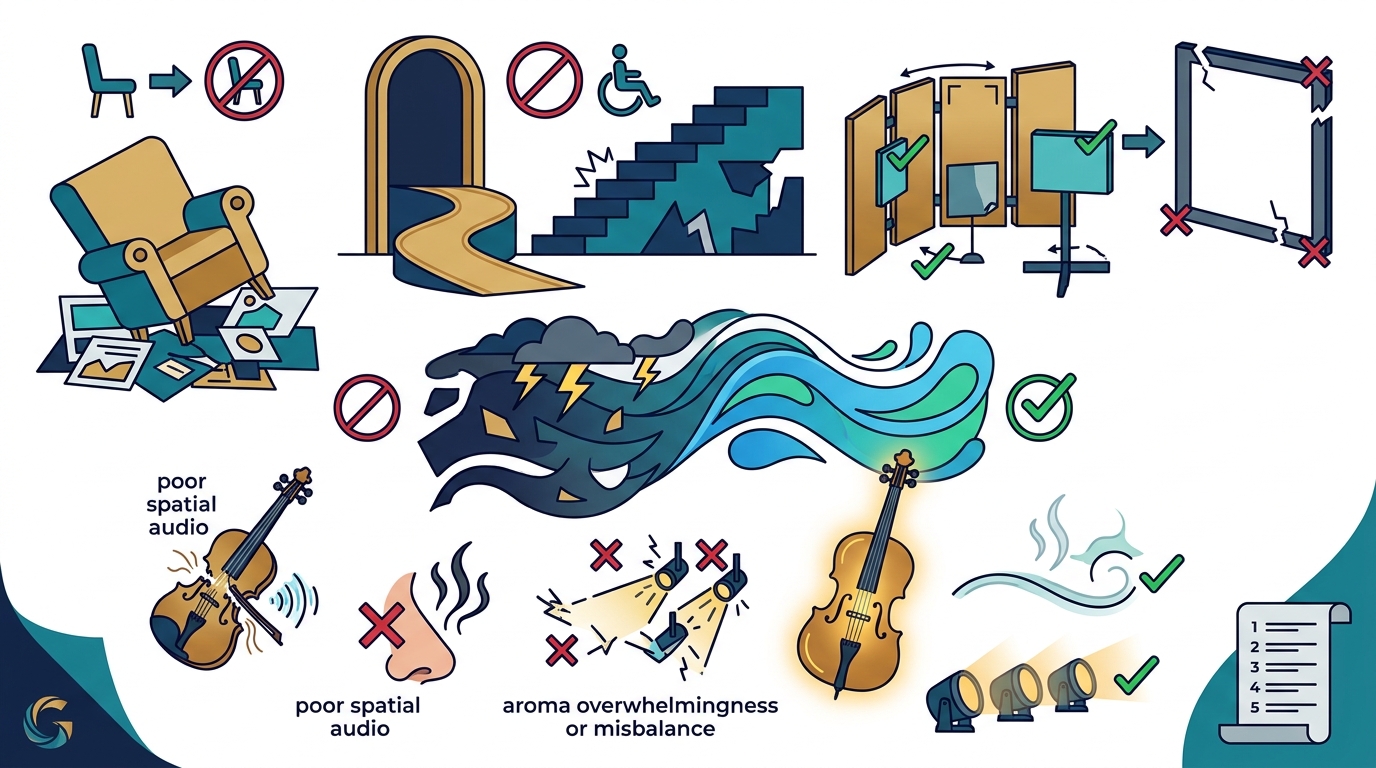
Many people assume that immersive art is just about visuals, but sound and spatial design are equally important. Multi-sensory immersion is a design approach that engages multiple senses, including sight, sound, and sometimes smell, to create a deeper connection with the content. If the audio is poorly mixed or the spatial design feels cramped, the experience can feel disjointed. Look for providers that invest in high-quality audio and spatial planning. Grande Experiences uses its proprietary SENSORY4 system, which integrates projection, audio, and aroma to create a cohesive environment. This attention to detail ensures that the technology enhances the narrative rather than distracting from it. By prioritizing providers with a strong technical foundation, you ensure a polished and professional experience for your group.
Key Takeaways
- Prioritize comfort: Check for motion sensitivity triggers and offer a mix of static and dynamic content.
- Verify accessibility: Ensure the venue supports visitors with varying physical and sensory needs. according to Selecting an Accessible
- Match the audience: Align the exhibition's theme and tone with your group's interests and age range.
- Plan logistics: Consider venue location, parking, and dwell time to ensure a smooth experience.
- Value technology: Choose providers with high-quality audio and spatial design for a cohesive multi-sensory experience.
Frequently Asked Questions
What is the best type of immersive art for large groups?
Large groups often benefit from exhibitions with open floor plans and clear sightlines, such as Van Gogh Alive, which allows for flexible movement and social interaction.
How long do immersive art experiences typically last?
Most immersive exhibitions last between 45 minutes and two hours, depending on the venue and the depth of the content. Always check the specific duration when booking.
Are immersive art experiences suitable for children?
Yes, many immersive experiences are family-friendly. Look for exhibitions that offer interactive elements and clear storytelling, such as Leonardo da Vinci – 500 Years of Genius, which appeals to curious minds of all ages. according to Research on the
What should I do if someone in my group feels uncomfortable?
Most venues offer quiet areas or exit points where visitors can take a break. It is helpful to choose providers that design their spaces with comfort and accessibility in mind.
How can I ensure the experience is inclusive?
Look for venues that provide audio descriptions, tactile elements, and clear signage. Providers like Grande Experiences focus on inclusive design to ensure all visitors can engage with the content.
Conclusion
Avoiding these common mistakes ensures that your group enjoys a memorable and inclusive immersive art experience. By focusing on comfort, accessibility, audience alignment, logistics, and technology, you can choose an exhibition that resonates with everyone. Grande Experiences offers a range of high-quality immersive exhibitions designed to meet these standards. To find the perfect experience for your group, to discuss your specific needs and venue options.