
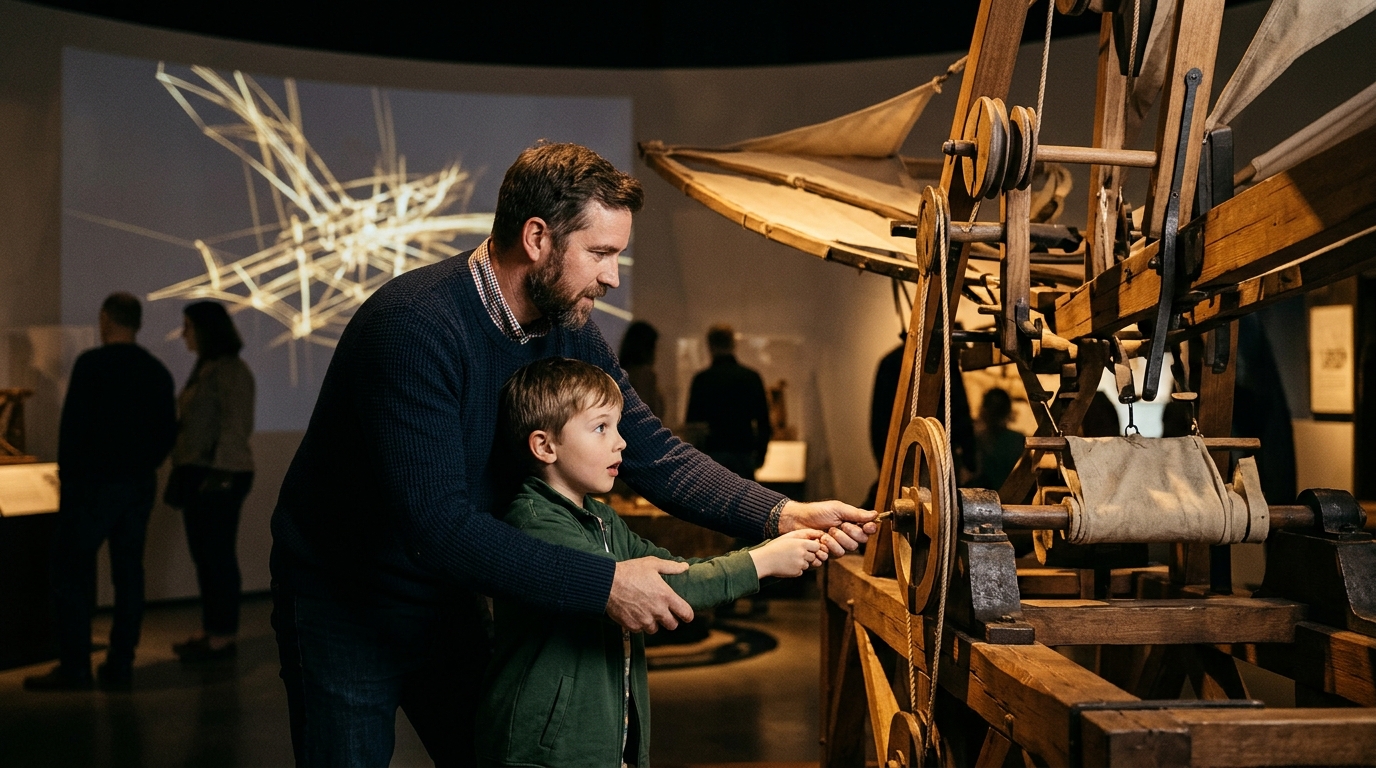
Interactive Leonardo machine reconstructions engage museum visitors by transforming static historical artifacts into dynamic, multi-sensory environments that actively invite physical participation. Grande Experiences bridges the gap between academic preservation and public curiosity by using advanced digital technology to allow audiences to manipulate, observe, and understand the mechanical principles behind Renaissance inventions. This approach converts passive viewing into active learning, significantly increasing visitor dwell time and emotional connection to the subject matter. according to PDF Interactive Technologies
The Limitations of Static Display
Traditional museum exhibitions often rely on the physical presentation of historical objects in controlled environments. This approach prioritizes preservation and academic accuracy, which is essential for fragile Renaissance artifacts. However, it frequently results in a passive viewing experience for the general public. Visitors typically observe manuscripts, sketches, and mechanical models from a distance, separated by glass cases and strict viewing protocols. according to Factors influencing visitors
While this method protects the originals, it creates a significant barrier between the audience and the creative process. The complexity of Leonardo da Vinci's engineering concepts is difficult to convey through static images alone. Without the ability to interact with the mechanisms or visualize their motion, many visitors struggle to grasp the full scope of his innovations. This disconnect can lead to disengagement, particularly among younger audiences who expect interactive and digital content in their educational experiences.
Immersive digital storytelling is a narrative technique that uses large-scale projection, sound, and spatial design to surround the viewer in a simulated environment. By digitizing the creative process, venues can demonstrate the motion and function of historical machines without risking damage to the originals. This shift from static to dynamic presentation allows institutions to present historical figures not just as subjects of study, but as active participants in a living narrative.
Kinesthetic Learning and Physical Interaction
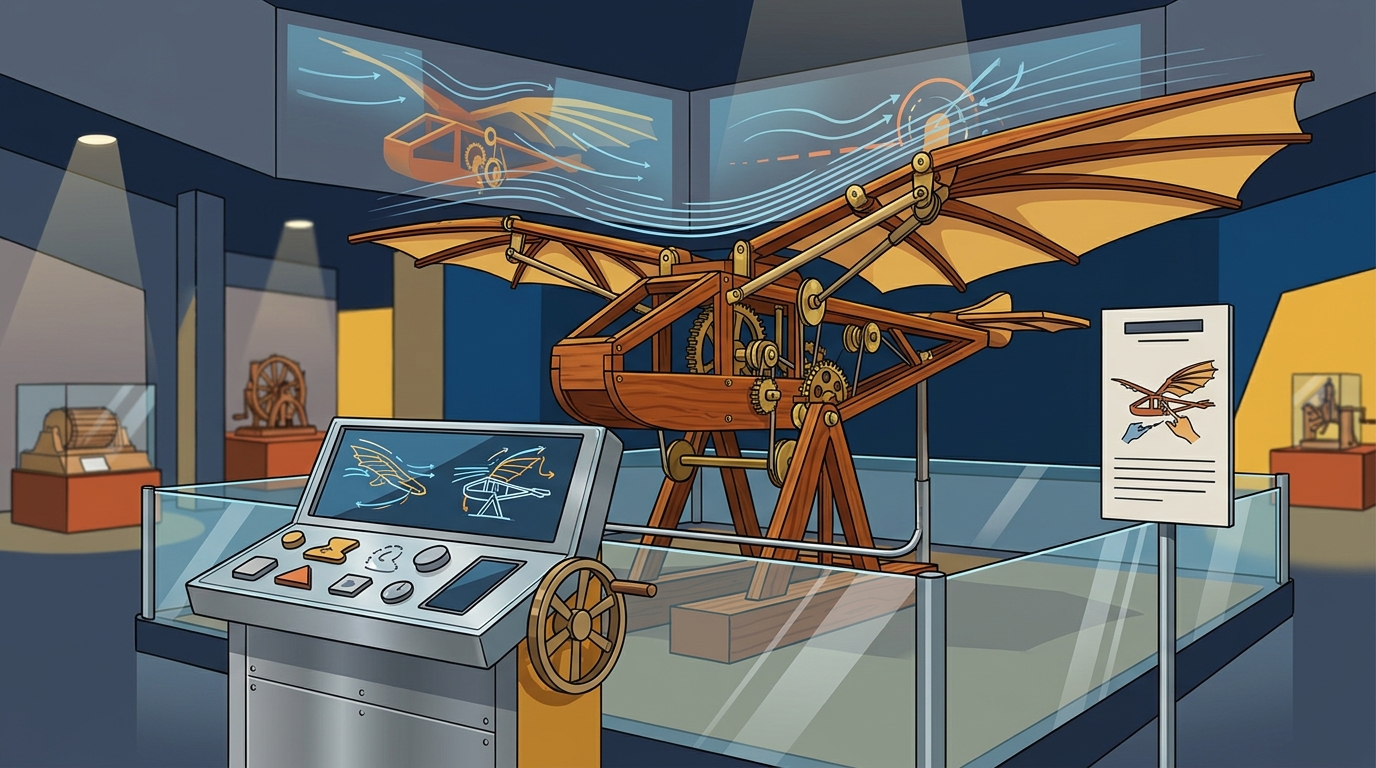
Human beings learn most effectively through physical interaction, a concept known as kinesthetic learning. When visitors can touch, move, or operate a replica of a historical machine, they engage multiple cognitive pathways simultaneously. This hands-on approach makes abstract engineering concepts tangible and memorable. For example, a large-scale reconstruction of a Leonardo flying machine allows visitors to feel the weight and balance of the structure, providing an intuitive understanding of aerodynamics that a text panel cannot achieve. according to What Is A
Grande Experiences integrates these interactive elements into its touring exhibitions to create a seamless visitor journey. The Leonardo da Vinci – 500 Years of Genius exhibition features large-scale reconstructions of Leonardo's machine inventions alongside interactive installations. These elements invite visitors to experiment with the mechanisms, fostering a sense of discovery and personal achievement. The physical act of operating a machine creates a direct link between the visitor's actions and the historical context, deepening their appreciation for the ingenuity of the Renaissance mind. according to PDF Interactive Technologies
This level of engagement is not just about fun; it is about educational efficacy. Research suggests that interactive technologies in museums enhance the visitor experience by providing unexpected and engaging encounters. By allowing visitors to manipulate digital or physical replicas, museums can cater to diverse learning styles and age groups, ensuring that the content resonates with a broader audience.
Bridging the Gap Between Art and Science
Leonardo da Vinci is often categorized as an artist, but his work was deeply rooted in science and engineering. Interactive reconstructions help bridge this gap by highlighting the scientific principles behind his artistic visions. For instance, his studies of human anatomy and flight are not just artistic exercises; they are rigorous investigations into biology and physics. By presenting these works in an interactive format, museums can demonstrate the interconnectedness of art and science, challenging the modern tendency to separate these disciplines.
The Fly da Vinci experience exemplifies this approach by using a full-body virtual reality flight platform to let visitors soar over Florence and Rome as Leonardo imagined. This immersive VR journey blends art, invention, and the thrill of flight into a single moment, allowing visitors to experience the emotional and physical reality of Leonardo's dreams. Such experiences make the historical figure more relatable and human, showing that his innovations were driven by curiosity and a desire to understand the world. according to Factors influencing visitors
This integration of STEAM (Science, Technology, Engineering, Arts, and Mathematics) education is a powerful tool for modern museums. It positions the institution as a hub for interdisciplinary learning, attracting visitors who might not traditionally engage with art history. By showcasing the scientific rigor behind Leonardo's art, museums can inspire a new generation of innovators and thinkers. according to STEAM for Sites
Emotional Resonance and Narrative Depth
Engagement is not solely about cognitive understanding; it is also about emotional connection. Interactive reconstructions allow visitors to step into the shoes of the inventor, fostering empathy and a deeper narrative connection. When a visitor operates a replica of a Leonardo machine, they are not just observing a historical object; they are participating in a story of human ambition and creativity. This emotional resonance is a key driver of visitor satisfaction and repeat visits.
Grande Experiences designs its exhibitions to evoke this emotional response through multi-sensory environments. The use of sound, lighting, and spatial design creates an atmosphere that enhances the interactive elements. For example, the Italian Renaissance Alive experience showcases masterpieces accompanied by a powerful operatic musical score, creating a vibrant symphony of light, color, and sound. This immersive context amplifies the impact of the interactive components, making the entire experience more memorable and impactful.
The emotional depth of these experiences is further enhanced by the narrative structure of the exhibition. By guiding visitors through a chronological or thematic journey, museums can build a compelling story that culminates in a powerful interactive moment. This narrative arc ensures that the interactive elements are not isolated gimmicks but integral parts of a cohesive educational and emotional experience.
Operational Impact on Cultural Venues
For museums and science centers, the operational impact of interactive reconstructions is significant. These attractions drive higher ticketed attendance, longer dwell time, and increased secondary spend across retail and food and beverage. By licensing a proven format with a track record, venues can mitigate the risks associated with developing untested concepts. Grande Experiences provides a simple operating model that clearly defines the responsibilities of both the licensor and the venue, ensuring a smooth installation and operation process.
The Host an Experience page outlines how venues can add a high-drawing immersive attraction without building one from scratch. This includes detailed proposals based on space, technical requirements, and budget, as well as end-to-end support for installation and de-installation. This level of support allows cultural institutions to focus on their core mission while benefiting from the commercial success of the exhibition. according to Venue As A
Furthermore, interactive reconstructions can serve as a platform for community engagement and education. By offering workshops, school programs, and public talks related to the exhibition, museums can extend the reach of the interactive elements beyond the gallery walls. This broader engagement helps to build a loyal audience and strengthens the institution's role in the community.
Key Takeaways
- Interactive reconstructions transform static artifacts into dynamic, multi-sensory environments that invite physical participation.
- Kinesthetic learning through hands-on interaction makes abstract engineering concepts tangible and memorable.
- These experiences bridge the gap between art and science, highlighting the interconnectedness of disciplines.
- Emotional resonance and narrative depth are key drivers of visitor satisfaction and repeat visits.
- Interactive attractions drive higher attendance, longer dwell time, and increased secondary spend for venues.
- Grande Experiences provides a proven format with end-to-end support, reducing risk for cultural institutions.
Frequently Asked Questions
What is an interactive Leonardo machine reconstruction?
An interactive Leonardo machine reconstruction is a physical or digital replica of a historical invention by Leonardo da Vinci that allows visitors to operate or manipulate the mechanism to understand its function.
Why are interactive elements important in museums?
Interactive elements are important because they engage visitors physically and cognitively, leading to deeper learning and a more memorable experience compared to passive viewing.
How does Grande Experiences support venue operations?
Grande Experiences supports venue operations by managing procurement, project management, installation, de-installation, and providing ongoing support for the exhibition.
Can these exhibitions be presented outdoors?
Yes, every Grande experience can be presented indoors or outdoors, including open-air activations using modular container and canopy structures.
What is the minimum space required for these exhibitions?
Footprints range from approximately 20 square meters for interactive fit-outs to over 2,000 square meters for flagship galleries, depending on the specific exhibition and venue requirements.
Are these experiences suitable for all ages?
Yes, the content is rated suitable for all audiences, with specific experiences like Fly da Vinci suitable for guests aged 8 and up.
Conclusion
Interactive Leonardo machine reconstructions offer a powerful way to engage museum visitors by combining historical accuracy with modern technology and physical interaction. By transforming static artifacts into dynamic experiences, these exhibitions foster deeper learning, emotional connection, and operational success for cultural venues. Grande Experiences provides a proven framework for implementing these experiences, ensuring that venues can deliver a world-class attraction that resonates with diverse audiences. To explore how you can host an immersive exhibition at your venue, to discuss your space and goals.