
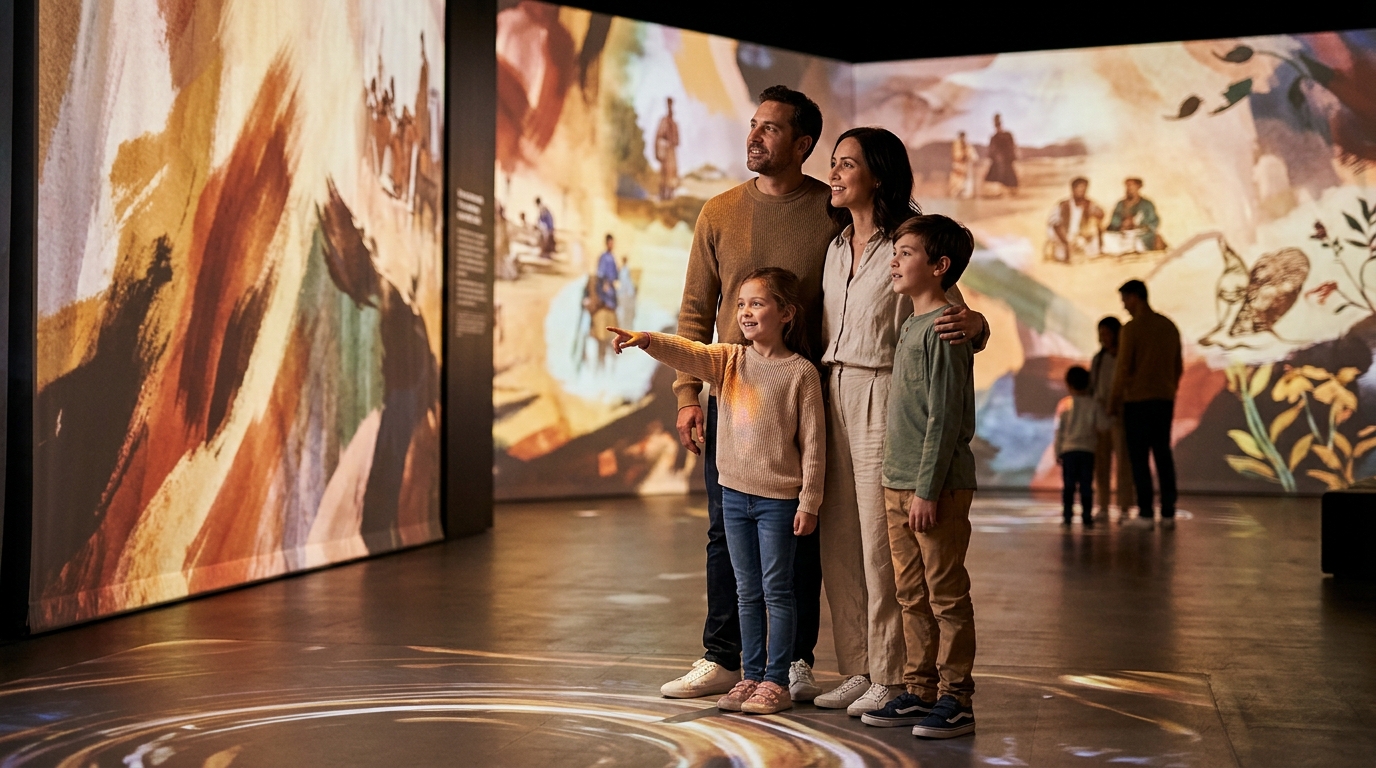
Immersive storytelling engages families by transforming passive observation into active, shared participation. By surrounding visitors with multi-sensory environments, these experiences create a common emotional language that bridges generational gaps. Grande Experiences designs these environments to foster connection, allowing families to explore cultural narratives together in a way that traditional static displays cannot achieve.
The Power of Shared Narrative
Traditional museum visits often result in parallel viewing, where family members look at different artifacts without interacting. Immersive storytelling changes this dynamic by placing the entire group within a single, continuous narrative space. When a family enters a room where the walls, floor, and ceiling are part of the story, they are forced to look in the same direction and react to the same stimuli. This shared focus creates a collective memory that is stronger than individual recollection.
For example, in a large-scale projection environment, a child might point out a detail in the sky while a parent recognizes the historical context of the scene. This exchange turns the visit into a dialogue rather than a lecture. The narrative structure of these exhibitions provides a safe framework for discussion, allowing families to ask questions and share interpretations without the pressure of finding the "correct" answer.
Multi-Sensory Engagement and Emotional Resonance
Immersive storytelling is a design approach that utilizes multiple senses, including sight, sound, and sometimes smell, to evoke emotional responses. By engaging more than just the visual cortex, these experiences bypass the intellectual barriers that can make art feel distant or difficult. When a family hears a specific musical score that matches the visual rhythm of a painting, the emotional impact is amplified. This resonance creates a sense of wonder that is easily shared among group members.
Grande Experiences integrates aroma and spatial audio into its installations to deepen this connection. For instance, the scent of a specific era or location can trigger nostalgic or curious responses in visitors of all ages. This multi-sensory layering ensures that the experience is not just seen but felt, making it more memorable for children and adults alike. The emotional weight of the experience encourages families to linger, explore, and discuss what they are feeling.
From Passive Viewing to Active Participation
Active participation is a core component of modern immersive design. Instead of standing behind a rope, visitors are invited to move through the space, interact with digital elements, or influence the narrative through their presence. This agency is particularly important for families with children, who often struggle to remain still during traditional gallery visits. By allowing movement and interaction, immersive exhibitions respect the energy levels and learning styles of younger visitors.
Consider a virtual reality flight experience where guests spread their arms to simulate flying. This physical engagement creates a shared thrill that bonds participants. When a parent and child experience the same sensation of speed and height, they share a moment of pure excitement that transcends the content of the story. This type of interactive storytelling turns the audience into protagonists, making the cultural environment a playground for discovery.
Bridging Generational Gaps in Cultural Understanding
Cultural environments can sometimes feel intimidating for families, particularly when the subject matter is complex or historical. Immersive storytelling simplifies this barrier by presenting culture through emotion and experience rather than dense text. This approach makes complex topics, such as the life of a Renaissance artist or the history of a specific region, accessible to a wider audience. Families can engage with the essence of the culture without needing prior academic knowledge.
By focusing on universal human experiences, such as the desire for flight or the beauty of nature, these exhibitions create a common ground for intergenerational dialogue. A grandparent might share a memory related to the story, while a grandchild explores the digital interface. This exchange of perspectives enriches the cultural understanding of the entire family. It transforms the museum or gallery from a place of silent reverence into a hub of active cultural exchange.
Designing for Family Dynamics
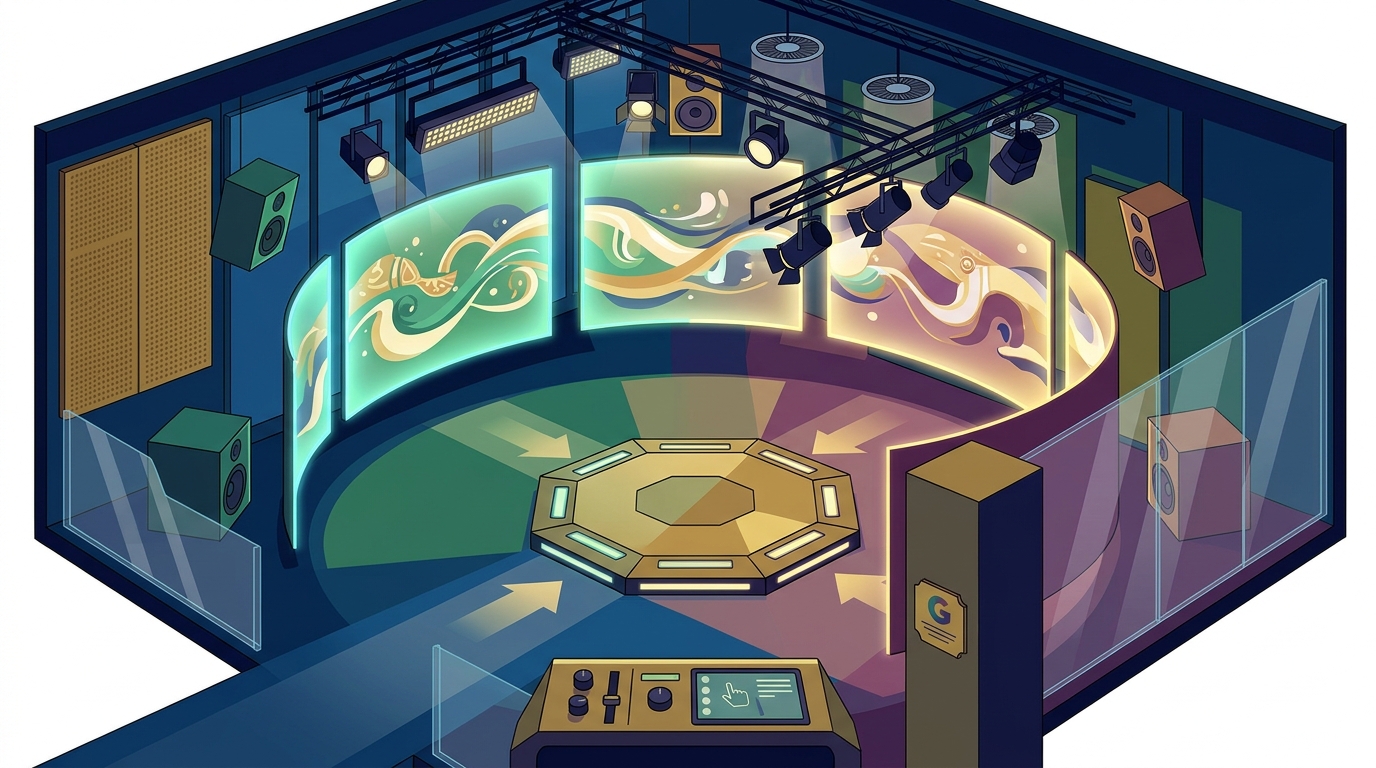
Effective immersive storytelling for families requires careful consideration of group dynamics. Designers must create spaces that allow for both individual exploration and group cohesion. This means designing sightlines that keep family members in view of one another while providing enough space for them to move freely. The pacing of the narrative is also crucial; it must be slow enough for adults to appreciate the details but engaging enough to hold the attention of children.
Grande Experiences focuses on creating high-throughput, repeatable attractions that accommodate these dynamics. By offering experiences that can be enjoyed solo or side-by-side, designers ensure that families can choose their level of interaction. This flexibility is key to making immersive culture a viable option for busy family schedules. The goal is to create an environment where the act of being together is as rewarding as the content itself.
Key Takeaways
- Immersive storytelling creates a shared narrative space that encourages family dialogue and collective memory.
- Multi-sensory elements, such as sound and aroma, amplify emotional resonance and make cultural content more accessible.
- Active participation through movement and interaction respects the energy levels of children and engages adults.
- These experiences bridge generational gaps by focusing on universal emotions rather than dense academic text.
- Design for family dynamics requires balancing individual exploration with group cohesion and pacing.
- Immersive environments transform passive viewing into active, shared discovery, enhancing the overall cultural experience.
Frequently Asked Questions
What is immersive storytelling in a cultural context?
Immersive storytelling is a design methodology that surrounds visitors with multi-sensory environments to convey a narrative. In cultural settings, it uses projection, sound, and spatial design to make audiences feel part of the story rather than just observers.
How do immersive exhibitions help families connect?
They provide a shared focal point and emotional experience that encourages dialogue. By reacting to the same visual and auditory stimuli, family members create a common language for discussing the content.
Are immersive experiences suitable for young children?
Yes, many immersive experiences are designed to be suitable for all ages. They often feature interactive elements and pacing that accommodate the attention spans and energy levels of younger visitors.
What role does sound play in family engagement?
Sound creates an emotional atmosphere that guides the visitor's attention. A well-composed score can synchronize the reactions of a group, making the experience feel more cohesive and impactful for families.
Can immersive storytelling replace traditional museum labels?
It complements them. While immersive environments provide the emotional hook, traditional labels or digital guides can offer deeper historical context for those who wish to explore further.
How does Grande Experiences approach family-friendly design?
Grande Experiences designs experiences that allow for both solo and side-by-side participation. This flexibility ensures that families can engage at their own pace while remaining connected to the shared narrative.
Conclusion
Immersive storytelling offers a powerful tool for engaging families in cultural environments. By combining narrative, multi-sensory design, and interactive elements, these experiences create shared moments of wonder and understanding. Grande Experiences continues to pioneer this field, creating exhibitions that not only showcase art and culture but also strengthen the bonds between those who experience them together. To explore how these experiences can be hosted or visited, view the immersive exhibition portfolio.