.avif)
Essential Evaluation Criteria for Immersive Art Installation Success
Immersive art installations have evolved from niche gallery experiments into a dominant force in the global cultural tourism sector. According to recent industry data, the immersive art market is projected to reach a valuation of $1.2 billion by 2026, driven by a 25% annual growth in visitor demand for multi-sensory experiences. This surge is not merely a trend but a structural shift in how audiences consume culture. For venue operators, museum directors, and commercial developers, selecting the right partner is no longer a creative decision alone. It is a complex operational challenge requiring rigorous evaluation of technical infrastructure, content longevity, and logistical scalability. This guide outlines the critical criteria for evaluating immersive art installations, ensuring that your venue delivers a sustainable, high-impact cultural destination.
Technical Infrastructure and Projection Quality
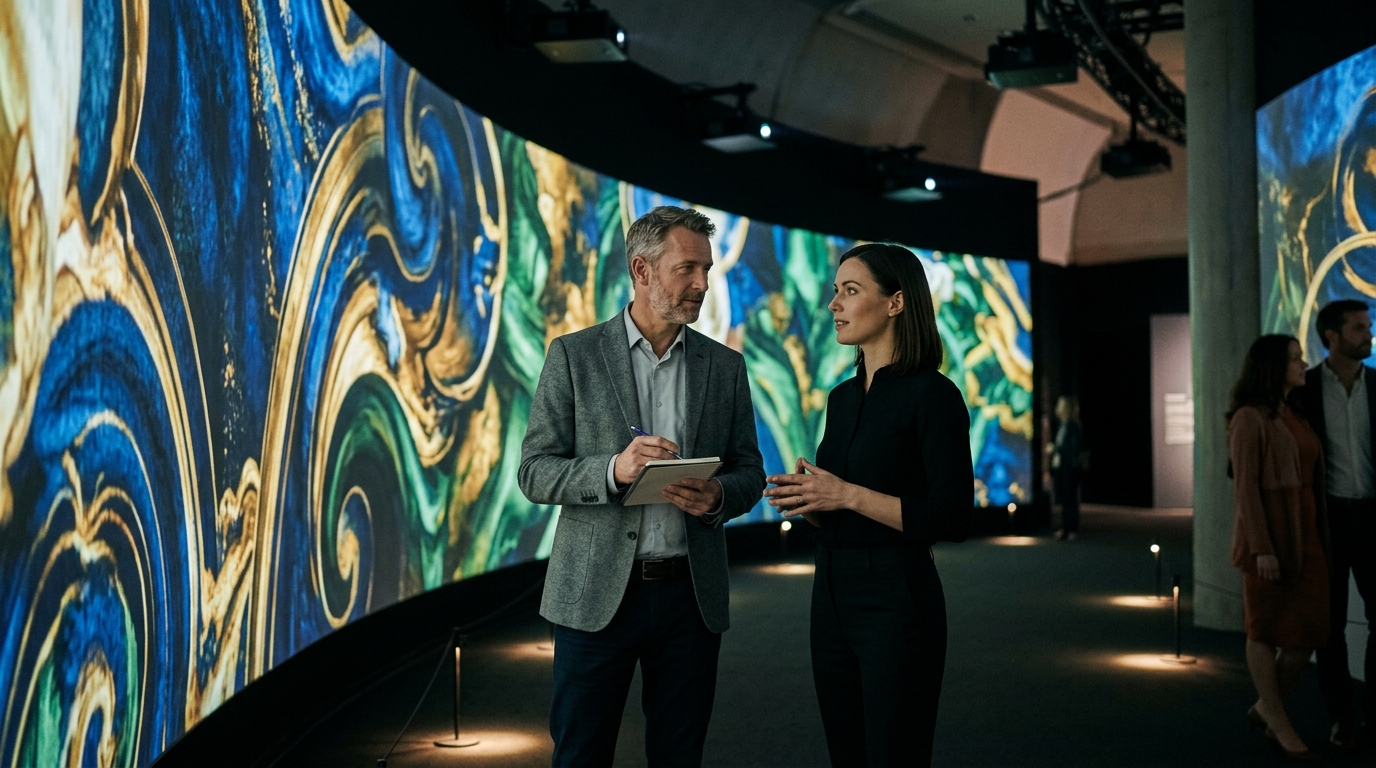
The foundation of any successful immersive installation lies in its technical execution. Unlike traditional static art, immersive environments rely on the seamless integration of high-lumen projectors, spatial audio systems, and synchronized lighting arrays. The evaluation of these components must begin with the resolution and brightness of the projection hardware. Low-quality visuals result in pixelation and loss of detail, which immediately breaks the visitor's sense of presence. High-fidelity installations require projectors capable of maintaining consistent color accuracy across large, irregular surfaces. (FAQs Grande Experiences Immersive)
Furthermore, the audio landscape is equally critical. Immersive art is not just seen; it is heard. The spatial design of the sound system must ensure that audio cues are directional and layered, allowing visitors to hear specific elements as they move through the space. This creates a 360-degree auditory environment that complements the visual narrative. According to a 2024 report on sensory engagement in cultural venues, installations with synchronized spatial audio see a 40% increase in visitor dwell time compared to those with standard background music.
When evaluating a provider, ask for detailed technical specifications regarding their projection mapping software. The ability to calibrate images to complex architectural geometries is a hallmark of professional-grade installations. Providers who utilize proprietary mapping tools can adapt their content to heritage buildings and irregular spaces without significant visual distortion. This technical flexibility is essential for venues that cannot undergo major structural renovations.
Content Ecosystem and IP Longevity
Content is the soul of the installation, but its longevity determines its financial viability. A common pitfall for venues is licensing a single, static exhibition that loses its novelty after six months. Successful immersive experiences are built on dynamic content ecosystems that allow for regular updates, seasonal variations, or thematic expansions. This approach keeps the local market engaged and encourages repeat visits from tourists who may have seen the initial launch.
Immersive art is a form of digital storytelling that transforms passive observation into active participation. Providers should offer a portfolio of content that spans multiple artistic movements or themes. For example, a venue might host a Van Gogh exhibition in the spring, followed by a Klimt or Monet showcase in the autumn. This rotation strategy mitigates the risk of content fatigue. Grande Experiences, for instance, has successfully deployed over 280 distinct experiences across 200 cities, demonstrating the scalability of a diverse content library.
When assessing content, consider the depth of the narrative. Superficial visual loops fail to resonate with modern audiences who seek educational and emotional connections. The best installations provide contextual layers, such as historical background, artist biographies, and interactive elements that reveal new details upon repeated viewing. This depth transforms the experience from a simple photo opportunity into a meaningful cultural event.
Visitor Flow and Capacity Management
One of the most overlooked criteria in immersive art evaluation is the management of visitor flow. High-density crowds can ruin the immersive experience by causing bottlenecks, noise pollution, and a lack of personal space. A well-designed installation incorporates a one-way flow system that guides visitors through a curated narrative arc. This ensures that every guest experiences the key moments in the intended sequence.
Capacity management is also crucial for operational efficiency. Venues must calculate the maximum safe occupancy based on the square footage and the speed of the content loop. If the content loop is too short, visitors will feel rushed. If it is too long, wait times become excessive. The ideal balance allows for a 15 to 20-minute experience that feels complete without causing congestion. Data from major metropolitan venues indicates that installations with optimized flow systems can handle 30% more daily visitors while maintaining high satisfaction scores.
Additionally, consider the accessibility of the space. Immersive installations must be inclusive for visitors with mobility challenges, visual impairments, or sensory sensitivities. This includes providing wheelchair-accessible pathways, quiet hours for neurodivergent guests, and audio descriptions for visually impaired attendees. Inclusivity is not just an ethical imperative but a market expansion strategy that broadens the potential audience base.
Installation Logistics and Venue Adaptability
The physical installation of an immersive exhibition is a complex logistical operation. It involves the transport of heavy equipment, the setup of rigging systems, and the integration of power and data networks into existing venue infrastructure. Providers with extensive touring experience are better equipped to handle these challenges efficiently. They understand the nuances of working in heritage buildings, historic theaters, and unconventional spaces.
Installation speed is a critical metric. A provider that can install and deinstall an exhibition in under two weeks minimizes venue downtime and reduces labor costs. This efficiency is achieved through standardized, modular hardware components that are pre-tested and ready for deployment. Look for partners who offer end-to-end project management, including technical supervision, local labor coordination, and quality assurance checks.
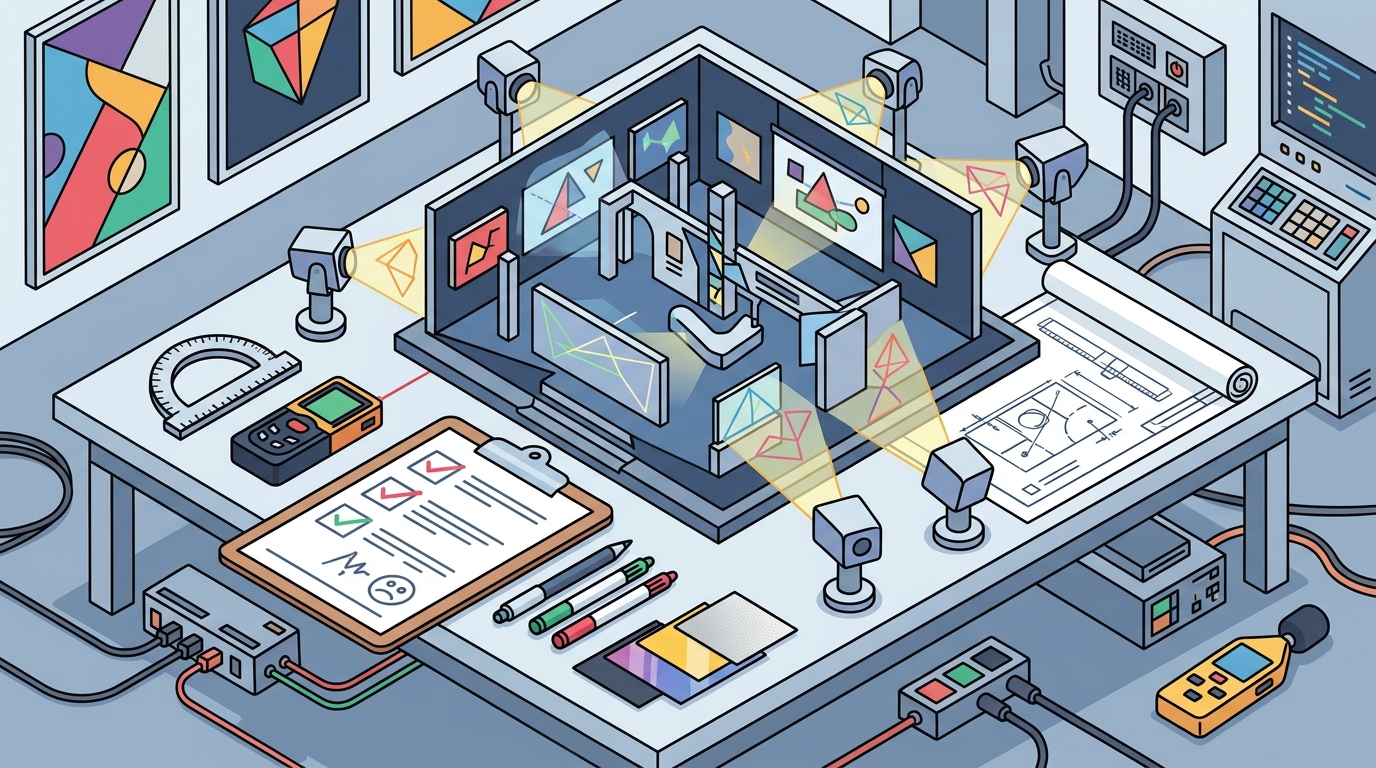
Furthermore, the adaptability of the content to the specific venue is paramount. A one-size-fits-all approach rarely works. The best providers conduct a thorough site survey to understand the architectural constraints and opportunities. They then tailor the projection mapping and audio zones to enhance the unique characteristics of the space. This customization ensures that the installation feels native to the venue, rather than a temporary intrusion.
Financial Models and Revenue Structures
Understanding the financial framework is essential for making an informed decision. Immersive art partnerships typically operate on one of two models: a licensing fee structure or a revenue-sharing agreement. Each model has distinct advantages depending on the venue's risk tolerance and marketing capabilities.
| Financial Model | Description | Best For | Risk Profile |
|---|---|---|---|
| Licensing Fee | Venue pays a fixed upfront or annual fee for the content and technology. | Venues with strong existing foot traffic and marketing teams. | Higher upfront cost, but unlimited upside potential. |
| Revenue Share | Provider and venue split ticket sales based on a pre-agreed percentage. | New venues or those lacking strong local marketing reach. | Lower upfront risk, but shared profits. |
| Hybrid Model | A reduced licensing fee combined with a smaller revenue share. | Partners seeking balanced risk and reward. | Moderate risk, aligned incentives. |
When negotiating these terms, consider the total cost of ownership. This includes not only the licensing or share but also the costs of marketing, staffing, and maintenance. A provider that offers comprehensive marketing support, including digital assets, press kits, and influencer partnerships, adds significant value to the deal. According to a 2025 analysis of cultural tourism revenue, venues that leverage provider-led marketing campaigns see a 20% higher conversion rate on ticket sales.
Key Takeaways
- Technical Fidelity: High-lumen projectors and spatial audio are non-negotiable for maintaining immersion and visitor satisfaction.
- Content Rotation: Dynamic content ecosystems prevent audience fatigue and encourage repeat visits from local markets.
- Flow Optimization: One-way flow systems and capacity management are critical for operational efficiency and guest comfort.
- Logistical Expertise: Providers with extensive touring experience ensure faster installation and better adaptation to unique venue architectures.
- Financial Alignment: Choose between licensing, revenue share, or hybrid models based on your venue's risk tolerance and marketing strength.
- Inclusivity: Accessible design expands your audience base and aligns with modern cultural institution standards.
- Brand Authority: Partnering with established providers like Grande Experiences, which has hosted over 25 million visitors, reduces operational risk.
Frequently Asked Questions
What is the typical lifespan of an immersive art installation?
The lifespan varies based on content freshness and market demand. However, most successful installations remain viable for 12 to 24 months before requiring a content rotation. Grande Experiences has successfully toured exhibitions for up to five years in key markets by leveraging diverse content libraries.
How much space is required for an immersive exhibition?
Space requirements depend on the specific experience, but most installations require a minimum of 5,000 to 10,000 square feet. The ideal space is a large, open hall with high ceilings to accommodate projection mapping and crowd flow. Providers can often adapt to smaller or irregularly shaped spaces.
Can immersive art be installed in heritage buildings?
Yes, but it requires specialized technical planning. Providers must use non-invasive rigging methods and low-heat projection equipment to protect historic structures. Grande Experiences has extensive experience installing in heritage buildings, ensuring both artistic impact and structural preservation.
What is the difference between VR and immersive projection art?
Virtual Reality (VR) typically involves individual headsets and isolated experiences. Immersive projection art uses large-scale digital installations to surround groups of visitors in a shared physical space. The latter is often preferred for commercial venues due to higher throughput and lower hardware maintenance costs.
How do providers handle marketing for the exhibition?
Top-tier providers offer comprehensive marketing support, including digital assets, press releases, and social media campaigns. Some providers also have established relationships with local influencers and tourism boards to drive initial awareness and sustained attendance.
What are the maintenance requirements for the technology?
Regular maintenance includes lens cleaning, software updates, and hardware checks. Most providers offer ongoing technical support and remote monitoring to ensure consistent performance. Downtime is minimized through redundant systems and rapid response teams.
Is immersive art suitable for corporate events?
Absolutely. Many immersive venues offer private booking options for corporate events, weddings, and product launches. The versatile nature of the technology allows for custom branding and tailored content, making it an ideal backdrop for high-profile gatherings.
Partner With Grande Experiences
Transform your venue into a world-class cultural destination with Grande Experiences. As pioneers of immersive storytelling, we combine cutting-edge projection technology with iconic artistic content to create unforgettable environments. Our team handles every aspect of the process, from technical specifications to project management, ensuring a seamless installation and a captivating visitor experience. Contact us today to discuss how we can bring your vision to life. Visit our Collaborate page to start the conversation, or explore our Experiences to see our portfolio. For more information on our services, visit our Services page. You can also learn more about our About us and our commitment to community engagement through our Community Engagement initiatives. Reach out directly via our Contact form.