.avif)
What accessibility accommodations should I look for in immersive art installations?
When evaluating immersive art installations, prioritize venues that offer multi-sensory alternatives, clear wayfinding, and flexible pacing. Grande Experiences designs these environments to ensure that visitors with diverse needs can engage fully with the content. Look for specific accommodations that address visual, auditory, and physical barriers to create an inclusive experience for all guests.
Sensory Alternatives and Multi-Sensory Design
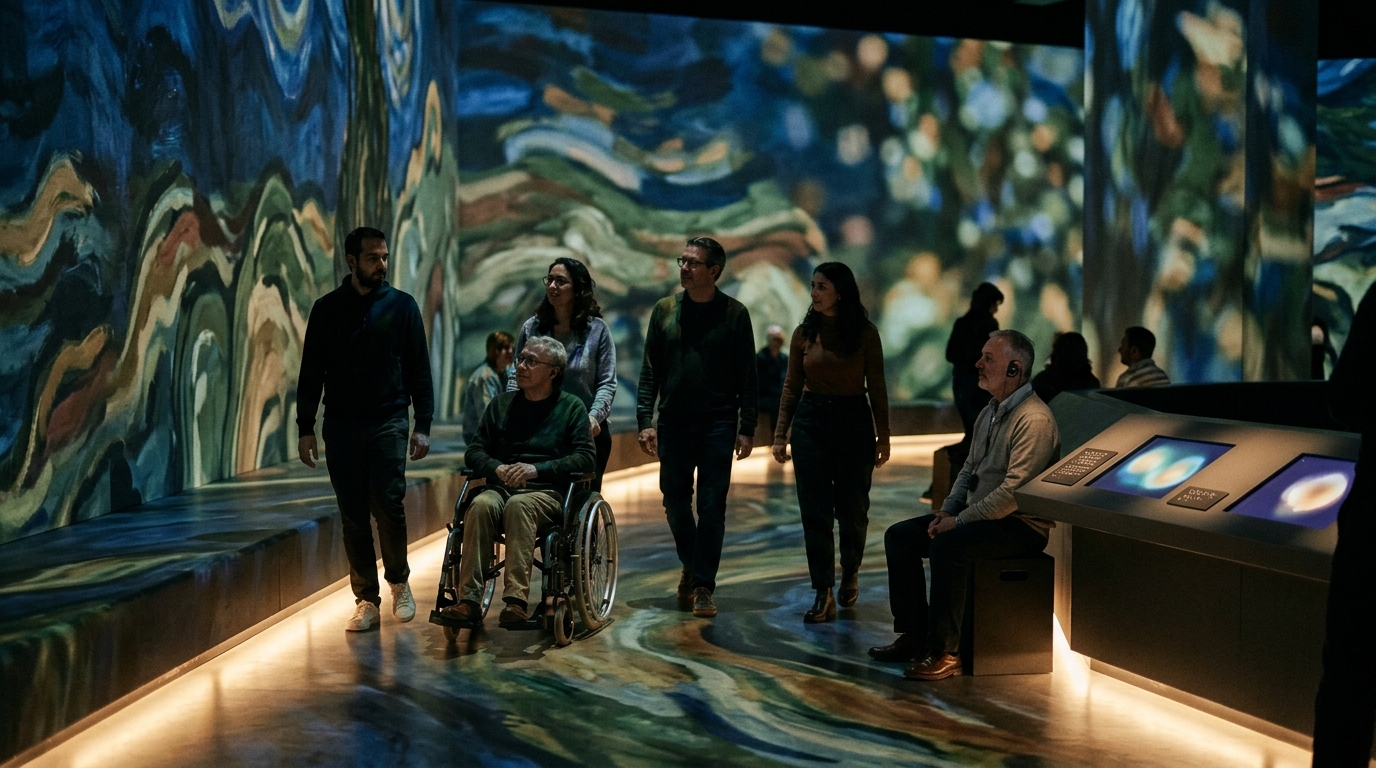
Immersive art is often defined by its overwhelming sensory input, which can be challenging for visitors with sensory processing differences. A robust accessibility strategy provides alternatives to intense stimuli. For example, Grande Experiences titles like Van Gogh Alive use large-scale projections paired with evocative classical scores and aroma. While this creates a rich environment, accessible venues should offer options to reduce audio volume or provide quiet zones. This allows visitors to engage with the visual art without the pressure of constant sound or scent.
Visual accessibility is equally critical. High-contrast text and clear signage help visitors with low vision navigate the space. Venues should also consider the pacing of the experience. Rapid changes in lighting or motion can be disorienting. A well-designed installation allows visitors to control their own pace, moving at a speed that feels comfortable rather than being forced through a linear path. For additional details, review the Contact Grande Experiences.
Physical Access and Mobility Considerations
Physical accessibility is the foundation of any inclusive venue. Visitors using wheelchairs, walkers, or other mobility aids require wide pathways and step-free entry. Grande Experiences scopes installations to fit various spaces, ranging from compact interactive fit-outs to large flagship galleries. In these environments, clear floor markings and ample turning space are essential. The venue must ensure that no part of the exhibition is inaccessible due to narrow corridors or uneven flooring.
Rest areas are another vital component. Immersive experiences can be physically tiring. Providing frequent, comfortable seating allows visitors to rest and regroup. This is particularly important for elderly visitors or those with chronic fatigue. The layout should be intuitive, with clear signage indicating where rest areas are located. This ensures that visitors can plan their visit without anxiety about finding a place to sit.
Auditory Support and Hearing Accommodations
Cognitive Clarity and Wayfinding
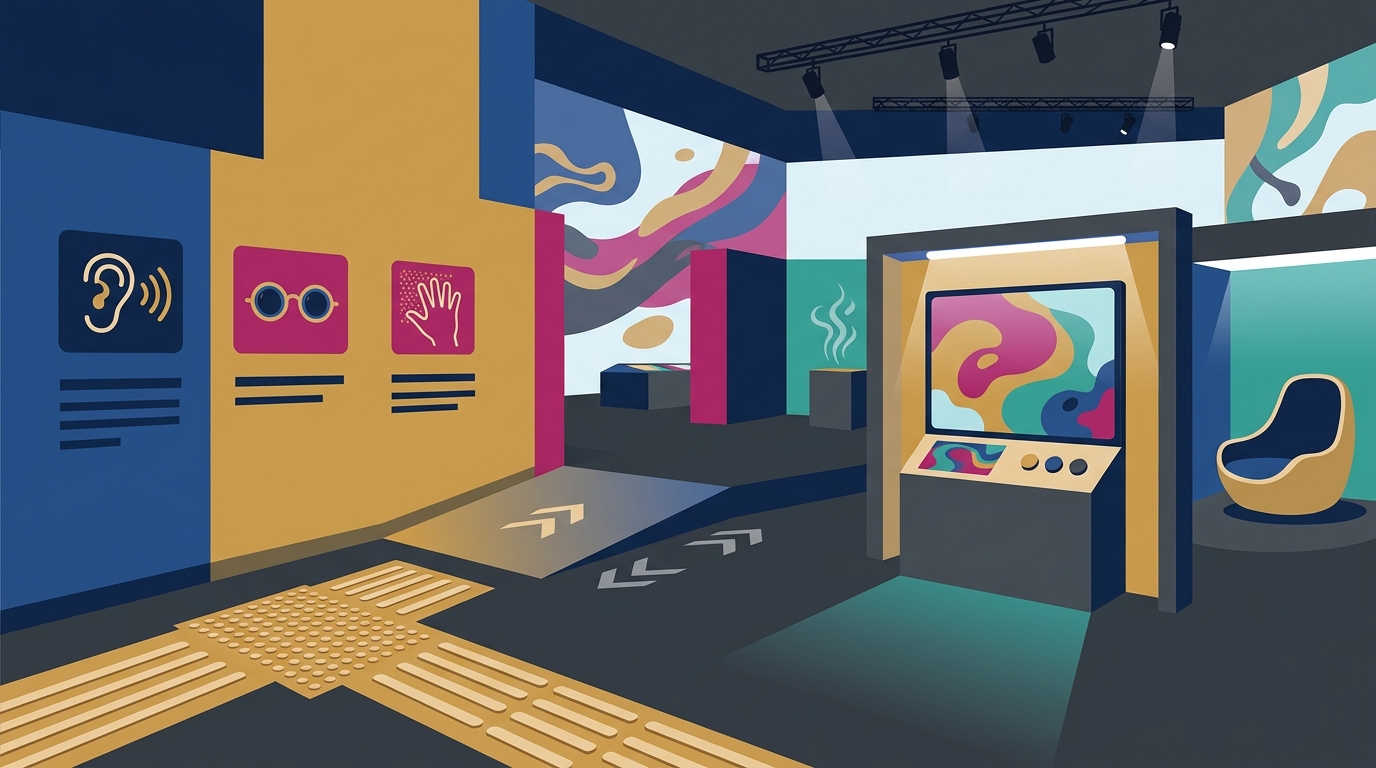
Wayfinding is a critical aspect of cognitive accessibility. Clear maps and directional signs help visitors orient themselves. These should be placed at regular intervals and at decision points. The use of color coding can also aid navigation. For example, different colors can indicate different sections of the exhibition. This visual system helps visitors track their progress and plan their route. It reduces the cognitive load required to navigate the space.
Social Inclusion and Support Services
Key Takeaways
- Look for multi-sensory alternatives that allow visitors to adjust the intensity of the experience.
- Ensure step-free access and wide pathways for visitors with mobility aids.
- Provide assistive listening devices and captions for audio content.
- Train staff to be knowledgeable and sensitive to the needs of visitors with disabilities.
- Offer rest areas and companion support to enhance the overall visitor experience.
Frequently Asked Questions
What is an immersive art installation?
An immersive art installation is a multi-sensory environment that surrounds visitors with visual, auditory, and sometimes tactile or olfactory stimuli to create an engaging experience.
Why is accessibility important in immersive art?
Accessibility ensures that visitors with diverse abilities can fully engage with the art, making the experience inclusive and enjoyable for everyone.
What are common accessibility barriers in immersive art?
Common barriers include loud noise, rapid motion, narrow pathways, and unclear signage, which can be challenging for visitors with sensory, physical, or cognitive disabilities.
How can venues provide sensory alternatives?
Venues can offer quiet zones, adjustable audio levels, and visual cues to help visitors manage sensory input according to their comfort.
What physical accommodations should venues provide?
How does Grande Experiences approach accessibility?
Grande Experiences designs exhibitions with flexible pacing and multi-sensory elements, ensuring that the visitor journey is intuitive and inclusive.